
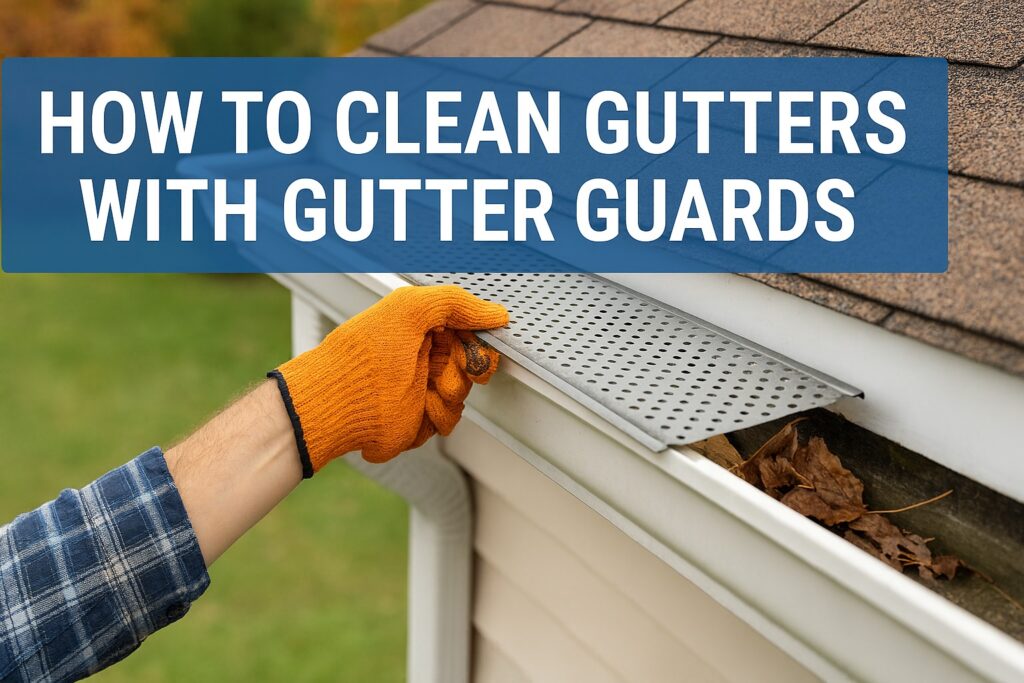
Many homeowners install gutter guards, expecting they will never need to clean their gutters again. In reality, gutter guards reduce debris buildup, but they do not eliminate maintenance.
Leaves, dust, roof grit, and small particles can still collect on top of the guards or slip through small openings. Over time, this material can slow water flow and cause clogs in the gutter channel or downspouts.
Regular inspection and occasional cleaning keep the gutter system working properly. When gutters stay clear, rainwater moves away from the roof and foundation as intended.
This guide explains how to clean gutters with gutter guards safely and efficiently. It also shows when cleaning is simple DIY work and when a professional gutter service may be the better option.
Table of Contents
Do Gutters With Gutter Guards Still Need Cleaning?
Yes. Gutters with guards still require periodic cleaning.
Gutter guards work by blocking large debris such as leaves and twigs. However, smaller materials often remain on top of the guards or pass through small openings.
Common debris that still collects includes:
- Roof shingle grit
- Pine needles
- Small leaves
- Dust and dirt
- Moss or algae growth
When debris builds up, rainwater may flow over the edge of the gutter instead of entering it. This can lead to water pooling near the home, staining on the siding, or damage around the roofline.
For most homes in the United States, inspecting gutters twice per year is enough. Homes near trees may require cleaning more often, especially during the fall when leaves drop heavily.
Types of Gutter Guards and How They Affect Cleaning
Not all gutter guards work the same way. The design of the guard determines how debris collects and how cleaning should be done.
Understanding the guard type on your home helps you choose the correct cleaning method.
Mesh Gutter Guards
Mesh guards use a fine metal screen that allows water to pass through while blocking larger debris.
These guards perform well but can collect:
- pollen
- roof grit
- small seeds
Cleaning usually involves brushing or rinsing the surface with a hose.
Screen Gutter Guards
Screen guards have wider holes than mesh systems. They block large debris but allow smaller materials to enter the gutter.
Over time this debris can settle inside the gutter channel.
Cleaning often requires removing the screen panel and clearing the inside of the gutter.
Foam Gutter Guards
Foam inserts sit inside the gutter and allow water to pass through the porous material.
While easy to install, foam guards tend to trap dirt and organic debris.
Cleaning may require lifting the foam insert out of the gutter and rinsing it before reinstalling.
Reverse Curve Gutter Guards
Reverse curve guards guide water around a curved surface and into the gutter while leaves slide off the edge.
Debris usually collects on top of the guard rather than inside the gutter.
Cleaning normally involves removing leaves and dirt from the top surface.
Tools Needed to Clean Gutters With Gutter Guards
Using the right tools makes the cleaning process faster and safer.
Basic tools include:
Extension ladder
A stable ladder is required to safely reach the gutter line.
Work gloves
Gloves protect your hands from sharp metal edges and debris.
Garden hose
A hose helps rinse dirt and test water flow through the gutters.
Soft brush or small broom
Useful for brushing debris off the surface of gutter guards.
Gutter scoop or small hand shovel
Helps remove debris inside the gutter channel when guards are removed.
Bucket or debris bag
Keeps leaves and dirt contained instead of dropping them around the yard.
Before starting, always place the ladder on stable ground and avoid leaning too far while cleaning.
Step-by-Step: How to Clean Gutters With Gutter Guards
Cleaning gutters with guards is usually easier than cleaning open gutters because large debris is already blocked. The main task is removing buildup from the guard surface and checking the gutter channel for smaller debris.
Follow these steps carefully.
Step 1: Inspect the Gutter System
Before cleaning, examine the entire gutter line.
Look for:
- debris sitting on top of the guards
- areas where water may overflow
- sections of guard that appear loose
- visible blockages near downspouts
This inspection helps identify the sections that require the most attention.
Step 2: Remove Debris From the Guard Surface
Most debris collects on top of the gutter guards.
Use a small broom or soft brush to sweep away:
- leaves
- small branches
- dirt buildup
- pine needles
Move debris into a bucket or drop cloth rather than pushing it onto the roof.
In many homes this step alone restores normal water flow.
Step 3: Rinse the Guards With a Hose
After brushing the surface, rinse the guards using a garden hose.
Spray water along the length of the gutter guard to wash away dust and small particles that remain on the screen or mesh.
Pay attention to areas where water pools. These spots may indicate a partial clog underneath.
Step 4: Remove Guards if Interior Debris Is Present
Some debris may pass through the guard openings and settle inside the gutter channel.
If water is not draining properly, remove the guard section to check the interior.
Typical materials found inside gutters include:
- roof shingle granules
- small leaves
- dirt and mud
- seeds and small plant growth
Use a gutter scoop or small shovel to remove this material.
Once cleaned, rinse the gutter channel with water.
Step 5: Flush the Gutters and Downspouts
After debris is removed, flush the system using a hose.
Start at the end of the gutter farthest from the downspout. Allow water to flow through the entire channel.
Watch the downspout outlet. A strong stream of water indicates proper drainage.
If water drains slowly, the downspout may be clogged and will need additional cleaning.
Step 6: Reinstall and Check the Guards
If you removed guard panels, reinstall them securely.
Check that:
- panels sit flat on the gutter
- screws or clips are tight
- gaps are not present between sections
A secure installation prevents debris from entering the gutter system again.
How Often Should You Clean Gutters With Gutter Guards?
Gutter guards reduce the amount of debris entering the gutter, but maintenance is still necessary.
For most homes in the United States, a basic schedule works well:
Twice per year inspection
Spring and fall are the best times to check gutters.
Annual cleaning
Even with guards installed, cleaning the system once per year helps remove fine debris.
Homes located near heavy tree coverage may need cleaning more often, particularly after large storms or during the fall leaf season.
Ignoring maintenance can allow debris to build up slowly until water overflow becomes noticeable.
Common Problems With Gutter Guards
Gutter guards improve gutter performance, but they are not perfect. Several issues can still occur.
Fine debris buildup
Dust, pollen, and roof granules can collect on mesh guards and reduce water flow.
Pine needle accumulation
Needles can stack on top of guards and form dense layers that block water entry.
Moss and algae growth
In shaded areas, moisture can allow organic growth on guard surfaces.
Downspout clogs
Even when guards work well, small debris can settle in downspouts over time.
Regular inspection helps detect these problems before they affect the gutter system.
Mistakes to Avoid When Cleaning Gutters With Gutter Guards
Homeowners often assume gutter guards eliminate maintenance. This assumption leads to several common mistakes.
Ignoring the gutters for years
Even with guards installed, small debris still collects. Long periods without inspection can allow buildup inside the gutter channel or downspouts.
Using high-pressure washing
Pressure washers can damage mesh guards or push debris deeper into the gutter system. A normal garden hose is usually sufficient.
Standing on the roof edge
Many homeowners try to reach gutters from the roof. This increases the risk of slipping, especially when debris or moisture is present.
Not checking the downspouts
Cleaning the guard surface alone does not guarantee proper drainage. Downspouts must also be checked to confirm water flows freely.
Forcing guards open or bending them
Some guards attach with clips or screws. Forcing them open can damage the system and allow debris to enter more easily.
Avoiding these mistakes helps extend the life of both the gutter system and the guards.
Signs Your Gutters Need Cleaning
Even with gutter guards installed, certain signs indicate the system needs cleaning.
Water spilling over the gutter edge
Overflow during rain often signals debris buildup on the guard surface or inside the gutter channel.
Plants or moss growing in gutters
Organic growth indicates that dirt and moisture have accumulated.
Water is draining slowly from the downspouts
A slow stream during flushing usually means debris is blocking part of the downspout.
Debris is visible on top of the guards
A thick layer of leaves or needles can block water from entering the gutter.
When these signs appear, cleaning should be done soon to prevent water damage around the home.
When to Hire a Professional Gutter Cleaning Service
Some situations make professional cleaning the safer or more practical option.
Homes with multiple stories require tall ladders and experience working at height. A professional team has proper safety equipment.
If gutters contain heavy debris buildup, removing it safely may require specialized tools.
Homes located near large trees often experience frequent gutter clogs. Regular professional service keeps the system working properly throughout the year.
Professional gutter cleaning services typically include:
- removal of debris from guards and gutters
- flushing of the entire gutter system
- downspout clearing
- inspection for leaks or loose sections
Routine service can extend the life of the gutter system and prevent drainage problems. Contact Gflow Kennesaw for free quotes
Frequently Asked Questions
Do you need to remove gutter guards to clean gutters?
Not always. Many gutter guards allow debris to be brushed or rinsed off the surface. However, if debris has entered the gutter channel, removing the guard section may be necessary to clean the interior.
What is the easiest way to clean gutter guards?
The easiest method is brushing debris off the surface and rinsing it with a garden hose. This removes leaves, dust, and small particles that accumulate on the guard.
Can gutter guards still clog?
Yes. Fine debris such as pollen, roof grit, and small leaves can build up over time. Guards reduce large debris but cannot block every small particle.
How often should gutter guards be cleaned?
Most homes benefit from one cleaning per year and two inspections per year. Properties surrounded by trees may require more frequent maintenance.
Are gutter guards worth installing?
Gutter guards reduce the amount of debris entering gutters and lower the frequency of cleaning. However, they do not eliminate maintenance. Periodic inspection and cleaning are still required to maintain proper water flow.