
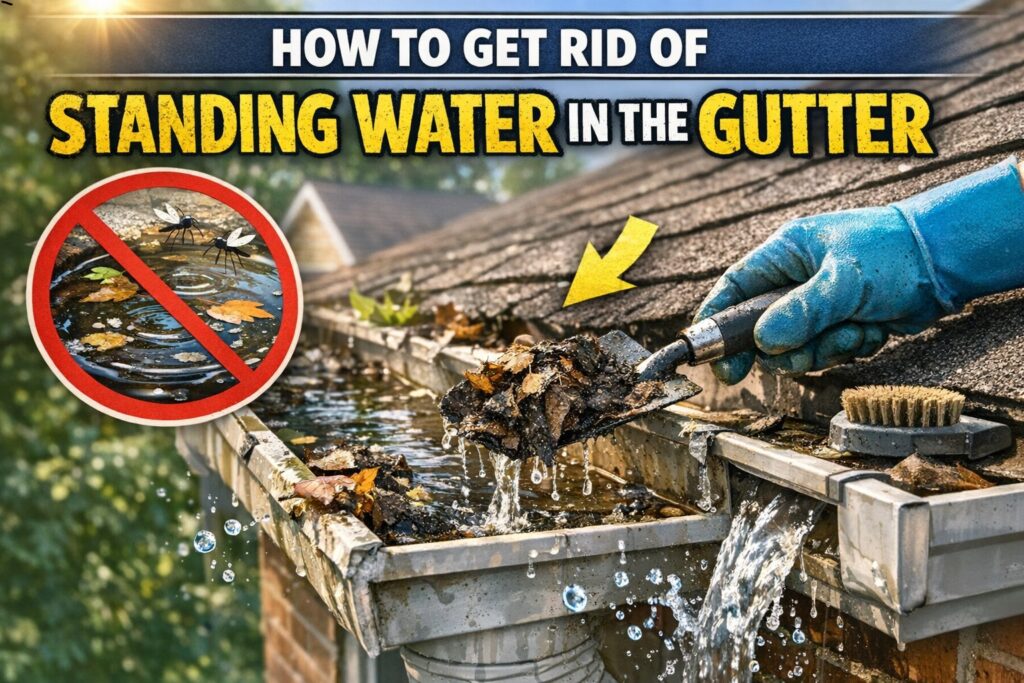
Water sitting inside a gutter after rain is a sign that something in the drainage system is not working correctly. Gutters are designed to move rainwater away from the roof and toward the downspout. When water stays in the channel instead of flowing out, it often points to a clog, a slope issue, or structural problems with the gutter system.
Standing water should not be ignored. Over time, it adds weight to the gutter, weakens brackets, and may lead to sagging sections. In warmer climates, it can also become a place where insects breed. Many homeowners notice the problem after heavy rain when they see puddles sitting in the gutter instead of draining toward the downspout.
The good news is that most causes are easy to diagnose. Once the source of the problem is clear, the fix usually involves cleaning, adjusting the gutter pitch, or repairing loose hardware.
For homeowners in areas with frequent storms and falling leaves, routine gutter inspection is important to prevent this issue from returning.
Why Standing Water in Gutters Is a Problem
A small amount of water during rainfall is normal. However, gutters should empty shortly after the rain stops. If water remains for hours or days, the system is not draining correctly.
One of the first concerns is structural stress. Water is heavy. Even a few feet of pooled water can place extra weight on gutter hangers and the fascia board that holds the gutter in place. Over time, this weight can pull sections of the gutter away from the house.
Standing water can also accelerate material damage. Metal gutters may begin to corrode faster when water sits in the same area repeatedly. In colder regions, the trapped water can freeze, expand, and cause cracks or separation at joints.
Another issue is pest activity. Still water can attract mosquitoes and other insects, especially during warm months. When debris is also present, it creates a damp environment where mold and organic buildup develop quickly.
For these reasons, a gutter that holds water should be inspected and corrected as soon as the issue appears.
Signs Your Gutters Are Holding Water
Some homeowners do not notice standing water until the problem becomes severe. Several early signs indicate the gutter is not draining properly.
One common sign is visible puddles in the gutter after rain has stopped. If water remains in the same spot each time it rains, the section likely has a drainage issue.
Another sign is debris collecting in one area of the gutter. Leaves and dirt tend to settle where water flow is weak. Over time, this debris builds up and makes the drainage problem worse.
You may also see sections of the gutter beginning to sag slightly in the middle. This happens when the weight of trapped water slowly pulls on the gutter hangers.
Overflow during moderate rain is another signal. Instead of flowing to the downspout, water spills over the edge of the gutter. This often indicates a blockage or improper slope.
If any of these signs appear, it is best to check the gutter system before the next heavy storm.
What Causes Standing Water in Gutters
Several issues can prevent water from draining properly. Identifying the cause is the first step before attempting a repair.
Clogged Gutters
The most common gutter problem is debris buildup. Leaves, pine needles, roof granules, and dirt can collect inside the gutter channel. When this material blocks the flow of water, it slows down drainage and allows water to pool behind the debris.
Homes located near trees experience this problem more often, especially during the fall when leaves drop in large amounts.
Cleaning the gutter thoroughly often solves the issue if the blockage is the only problem.
Blocked Downspouts
Even if the gutter channel is clear, water will not drain if the downspout is clogged. Debris sometimes travels through the gutter and becomes trapped inside the vertical pipe.
When this happens, rainwater backs up into the gutter and begins to sit along the channel.
Homeowners can test this by running water through the gutter with a hose. If water does not exit the downspout quickly, there is likely a blockage inside.
Improper Gutter Slope
Gutters must be installed with a slight angle so water naturally flows toward the downspout. This angle is known as the gutter pitch.
If the pitch is too flat or slopes the wrong way, water cannot move efficiently. Instead, it settles in low areas of the gutter.
Many older homes develop this problem over time as brackets loosen or sections shift slightly.
Adjusting the gutter pitch usually resolves the issue.
Sagging Gutters
Gutters are supported by hangers or brackets that attach them to the fascia board. When these fasteners loosen or break, the gutter may begin to sag in the middle.
A sagging section becomes a low point where water collects. As more water accumulates, the weight increases and the sagging becomes worse.
Replacing damaged hangers and securing the gutter back to the correct position can restore proper drainage.
Long Gutter Runs Without Enough Downspouts
Some drainage problems are related to gutter layout rather than clogs or slope issues. When a gutter run is very long but only has one downspout, large amounts of rainwater must travel a long distance before exiting.
During heavy rain, the water flow may slow down in the middle of the gutter. This can create areas where water begins to sit instead of moving toward the downspout.
Homes with long roof lines often require additional downspouts so water can exit the system faster. Adding another downspout or adjusting the drainage design can eliminate recurring standing water in these situations.
How to Get Rid of Standing Water in the Gutter (Step-by-Step)
Once the cause is identified, most gutter drainage issues can be corrected with a few practical steps. Always use a stable ladder and proper safety precautions when working around the roofline.
Step 1: Remove Debris From the Gutter
com
Start by clearing out leaves, dirt, and roof granules from the gutter channel, as cleaning your gutter also protects the foundation. A small scoop or gloved hands work well for this task. Place debris in a bucket instead of dropping it near the foundation.
Removing buildup allows water to move freely again and often resolves minor pooling problems.
Step 2: Flush the Gutter With a Garden Hose
After cleaning the channel, run water through the gutter using a garden hose. Begin at the end opposite the downspout.
Observe how the water moves through the gutter. It should flow smoothly toward the downspout without stopping. If water slows down or collects in one area, that section may have a slope issue.
Step 3: Check the Downspout for Blockages
If water backs up instead of flowing out of the downspout, there may be a clog in the pipe.
Try flushing the downspout with a hose from the top. If the blockage remains, the section may need to be cleared using a plumbing snake or by disconnecting the lower elbow.
Once the downspout is clear, water should move through the system much faster.
Step 4: Inspect the Gutter for Low Spots
Look along the length of the gutter while water flows through it. Low spots where water collects usually indicate sagging or incorrect pitch.
These sections often appear between hanger brackets where the gutter has begun to dip slightly.
Step 5: Tighten or Replace Loose Gutter Hangers
Loose or damaged hangers allow the gutter to shift out of position. Tightening existing screws or replacing worn hangers can restore the original alignment.
Modern gutter hangers provide stronger support and help prevent future sagging.
Step 6: Adjust the Gutter Pitch
If the gutter slope is incorrect, the system may need to be repitched. This involves slightly adjusting the height of the gutter so water naturally flows toward the downspout.
A small change in angle is usually enough to solve the problem.
How to Fix Gutter Slope Problems
Gutters should not sit completely level. A slight downward slope is necessary so gravity can move water toward the downspout.
A common guideline used in gutter installation is about one-quarter inch of slope for every ten feet of gutter length. This small angle is usually enough for proper drainage.
To check the slope, place a level along the front edge of the gutter. If the bubble shows the gutter is perfectly level or tilting away from the downspout, it may need adjustment.
Correcting the slope usually involves loosening the hangers and slightly raising or lowering sections of the gutter until water flows correctly. After adjustment, tighten the hangers securely to hold the new position.
For homeowners unfamiliar with gutter repairs, this step can be difficult because improper adjustments may cause new drainage problems.
When Professional Gutter Repair Is Needed
Some standing water problems cannot be solved with basic cleaning or small adjustments. In these cases, professional gutter repair may be the better option.
One example is severe sagging. If multiple hangers have failed or the fascia board behind the gutter has weakened, the entire section may need to be resecured or replaced.
Another situation involves incorrect installation. If the gutter system was installed without proper pitch or without enough downspouts, repeated drainage problems will continue until the layout is corrected.
Older gutters may also develop leaks at seams or corners after years of exposure to weather. When water damage spreads across multiple sections, replacing the affected parts of the system may be more effective than patching them.
A professional inspection can identify these structural issues and recommend the best repair approach.
How to Prevent Standing Water in Gutters
Preventing drainage problems is easier than repairing them later. A few simple maintenance habits can keep the gutter system working properly throughout the year.
Regular gutter cleaning is one of the most important steps. Removing leaves and debris two to three times per year helps maintain clear water flow. Homes surrounded by trees may require more frequent cleaning during the fall.
Another helpful step is trimming branches that hang directly above the roof. This reduces the amount of leaves and twigs that fall into the gutter system.
Checking the gutter alignment during seasonal inspections is also useful. Look for loose brackets, sagging sections, or areas where water previously collected.
Some homeowners install gutter guards to reduce debris buildup. While guards do not eliminate maintenance, they can slow the accumulation of leaves and help keep water moving toward the downspout.
Frequently Asked Questions
Is it normal to have standing water in gutters?
A small amount of water during rainfall is expected, but gutters should drain shortly after the rain stops. If water remains in the gutter for long periods, there is likely a blockage or slope issue.
What slope should gutters have?
Most gutter systems require a slight pitch of about one-quarter inch for every ten feet of gutter. This angle allows water to flow toward the downspout without appearing noticeably slanted.
Can standing water damage gutters?
Yes. Water adds weight to the gutter system and can cause sagging over time. It may also speed up corrosion in metal gutters and lead to joint separation.
Do gutter guards stop standing water?
Gutter guards reduce debris buildup, which can help prevent clogs. However, they do not correct slope issues or structural problems that cause water to pool.
How often should gutters be cleaned?
Most homes benefit from cleaning gutters at least twice a year, typically during spring and fall. Homes near large trees may require more frequent maintenance.
Need Help With Gutter Drainage Problems?
If your gutters continue to hold water after cleaning and inspection, the system may require professional adjustment or repair.
The team at Gflow Kennesaw helps homeowners restore proper gutter drainage by correcting slope problems, replacing damaged hangers, and clearing stubborn blockages. Properly functioning gutters protect the roof, siding, and foundation from water damage.
Scheduling a gutter inspection can identify the cause of standing water and prevent larger issues from developing after future storms