
Rain gutters move water away from your roof and foundation. When they work properly, rain flows from the roof into the gutter channel, then through downspouts to the ground drainage area. When debris blocks that path, water begins to collect, overflow, and spread around parts of the home that should stay dry.
Many homeowners only think about gutter cleaning in the fall. In reality, gutters face debris, storms, and runoff during every season. Leaves, twigs, roof grit, pollen, and small branches slowly build up inside the gutter channel. Without protection, this buildup eventually blocks water flow.
Full-time gutter protection systems reduce these gutter problems by covering the gutter opening while still allowing rainwater to enter. The cover filters debris before it can settle inside the system. This keeps water moving through the drainage path instead of sitting in the gutter.
For homes in areas with trees or heavy rainfall, year-round gutter protection becomes part of basic exterior gutter maintenance with gutter guards. It helps maintain steady drainage and reduces the risk of overflow during storms.
Table of Contents
How Gutters Work in a Home Drainage System
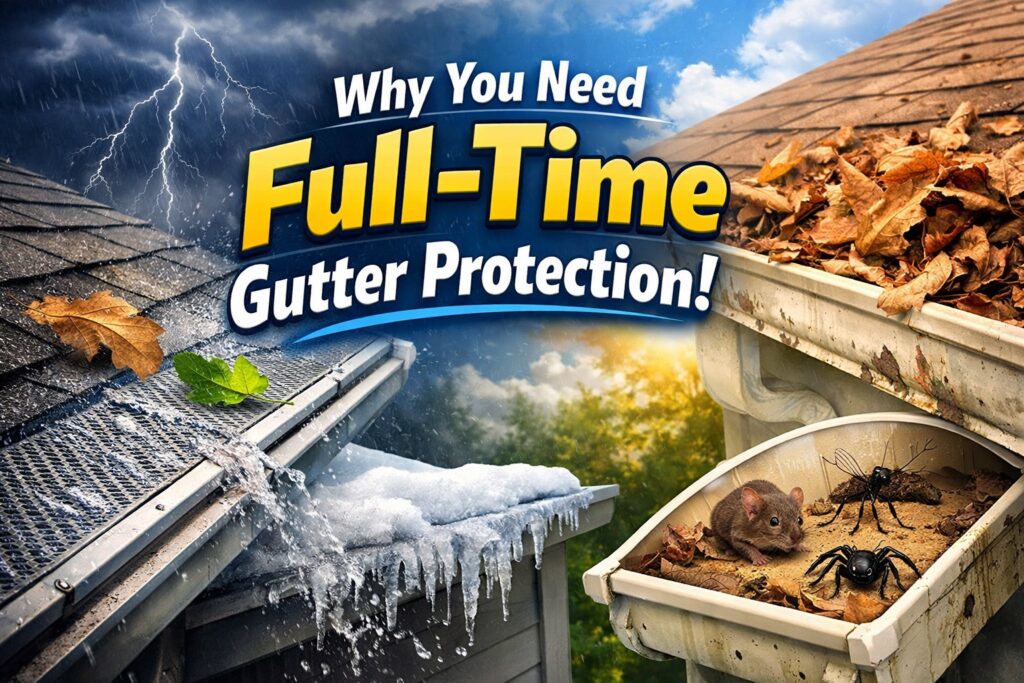
A gutter system is part of a larger roof drainage structure. When rain falls on the roof, water runs down the roof slope toward the edge. Gutters collect that runoff before it reaches the walls of the house.
The drainage process usually follows this path:
Roof surface → gutter channel → downspout → ground drainage area
Each part plays a specific role.
The gutter channel captures water along the roof edge. The downspout carries that water vertically to the ground. From there, the water flows away from the foundation through slope or drainage extensions.
If any part of this path becomes blocked, water cannot move efficiently. Even a partial blockage slows the flow. During moderate or heavy rainfall, slow drainage causes water to rise inside the gutter until it spills over the front edge.
U.S. Environmental Protection Agency materials discussing moisture control and drainage management around homes.
Overflow water often runs down exterior walls or pools around the base of the home. Over time, repeated overflow can affect siding, fascia boards, landscaping, and the foundation area.
Gutter protection helps maintain this drainage path by keeping debris from entering the gutter channel in the first place.
What Happens When Gutters Stay Unprotected
Open gutters collect debris throughout the year. Trees drop leaves, seeds, and small twigs. Roof shingles release small mineral granules. Wind carries dust and organic matter into the gutter channel.
This material begins to settle inside the gutter. Over time, several problems develop.
The first issue is clogging. Debris blocks water from reaching the downspout opening. When the downspout entrance becomes blocked, water has nowhere to go.
The second issue is standing water. When water cannot drain properly, it stays inside the gutter trough. Standing water adds weight to the gutter system and creates conditions for algae or mosquito breeding.
The third problem is overflow during storms. When rain falls faster than clogged gutters can drain, water spills over the edge. Instead of being directed away from the home, runoff spreads across roof edges and walls.
In some cases, the added weight from wet debris and trapped water pulls the gutter away from the fascia board. This leads to sagging sections or loose gutter brackets.
Full-time gutter protection helps reduce these conditions by stopping most debris before it reaches the gutter channel.
Major Problems Full-Time Gutter Protection Prevents
Unprotected gutters allow debris to collect inside the drainage channel. Once water flow slows or stops, several structural problems begin to appear around the home.
One common issue is foundation water buildup. When gutters overflow, rainwater falls directly near the base of the house instead of draining away. Repeated exposure saturates the soil around the foundation. Wet soil expands and can place pressure on foundation walls.
Another issue involves roof edge and fascia damage. Gutters attach to fascia boards along the roofline. When clogged gutters hold standing water and debris, moisture stays against these boards for long periods. Over time, wood fascia can soften, rot, or warp.
Blocked gutters can also contribute to mold and mildew growth. Moist debris inside the gutter holds water for days after rainfall. This damp material creates conditions where mold can grow along roof edges and exterior surfaces.
Clogged gutters also attract pests and insects. Leaves and standing water provide a nesting environment for mosquitoes, ants, and small rodents. Birds sometimes build nests inside open gutters where debris has accumulated.
A gutter protection system reduces these risks by limiting how much debris enters the gutter channel while still allowing rainwater to flow toward the downspout.
How Gutter Protection Works Year-Round
Gutter protection systems cover the opening of the gutter while allowing water to pass through small filtration openings. These openings block larger debris such as leaves and twigs while letting rainwater enter the gutter channel.
Different protection systems use different designs. Some use fine mesh screens, while others use curved covers that guide water into the gutter while debris slides off the edge.
Year-round protection matters because debris enters gutters during every season.
During spring, pollen, seeds, and small flower debris often collect along roof edges. These materials can form a thin layer inside the gutter that slows water flow.
In summer, heavy storms can blow small branches and leaves onto the roof. Wind then pushes this debris toward the gutter opening.
During fall, large volumes of leaves fall from nearby trees. This is the season when most gutter clogs form.
In winter, clogged gutters can hold water that freezes when temperatures drop. Ice buildup along the roof edge may contribute to ice dam formation.
A full-time gutter protection system helps reduce these seasonal problems by filtering debris before it enters the drainage channel.
Are Gutter Guards Worth It for Homeowners?
Many homeowners ask whether gutter guards completely eliminate maintenance. In most cases, they do not remove the need for maintenance entirely, but they can reduce how often cleaning is required.
Without protection, gutters may need cleaning several times each year, especially in areas with heavy tree cover. Leaves and organic debris can accumulate quickly and block the downspout opening.
With a protection system installed, most large debris stays on top of the guard rather than settling inside the gutter. Wind or rainfall often removes this debris from the surface.
Homeowners may still need occasional inspections to ensure the system remains clear and the downspouts are draining properly. However, maintenance frequency usually becomes lower compared with open gutters.
For many homeowners, the value of gutter protection comes from reducing clog-related problems such as overflow, standing water, and repeated cleanings.
When to Install a Full-Time Gutter Protection System
Some homes need gutter protection more than others. The need usually becomes clear when drainage problems appear repeatedly.
One common sign is frequent gutter clogs. If gutters fill with leaves or debris within a few months after cleaning, open gutters are allowing too much material to enter the channel.
Another indicator is water spilling over the gutter edge during rain. Overflow often means debris is blocking the downspout opening or slowing water movement through the gutter trough.
Homeowners may also notice plants or grass growing inside gutters. When organic debris stays wet for long periods, it begins to break down and form soil-like material. This creates a base where small plants can grow.
A fourth sign is sagging gutter sections. Wet debris and standing water increase the weight inside the gutter channel. Over time, this weight can loosen fasteners and pull the gutter away from the fascia board.
Homes located near trees usually benefit the most from gutter protection systems. Leaves, seeds, and small branches fall onto the roof and move toward the gutter opening during rainfall.
Install gutter guard system before these issues become severe. This maintains steady drainage and reduces the risk of water overflow around the home.
Summary
Gutters move rainwater from the roof to the ground drainage area. When they stay open and unprotected, leaves, twigs, and roof debris collect inside the channel. This buildup blocks water flow. During rain, clogged gutters can overflow, hold standing water, and send runoff toward the walls and foundation of the home.
Full-time gutter protection helps prevent these problems. A gutter protection system filters debris before it enters the gutter while still allowing rainwater to drain through the downspouts. This helps reduce clogs, limits overflow during storms, and keeps the roof drainage system working more consistently throughout the year.
For homeowners, this means fewer gutter blockages, less frequent cleaning, and a lower risk of water damage around the roofline and foundation.
At GFlow Kennesaw, the team provides gutter cleaning, repair, and gutter guard installation services in Kennesaw, GA. Our technicians help homeowners maintain clear gutters and install protection systems that keep rainwater moving away from the home