
After winter ends, gutters often hold leaves, small branches, roof grit, and pollen that have built up over several months. In Georgia, early spring storms arrive quickly, and gutters still blocked by winter debris cannot carry water away from the roof and foundation.
Many homeowners assume gutters only need cleaning in the fall. In reality, spring is when winter damage becomes visible. Ice expansion, heavy rain, and debris buildup can loosen gutter hangers, clog downspouts, and create small leaks along seams.
A simple inspection and cleaning routine at the start of spring helps ensure the roof drainage system works properly. The checklist below shows what Georgia homeowners should check before heavy seasonal rain begins.
Why Spring Is the Most Important Time to Check Your Gutters
Winter weather often leaves hidden problems inside a gutter system. Debris sits in the channels for months, moisture collects in low spots, and fasteners loosen as materials expand and contract.
When spring rain arrives, those small issues quickly turn into visible problems. Water begins to spill over the sides of gutters, downspouts stop draining correctly, and moisture collects near the home’s foundation.
Homes in Georgia also deal with seasonal debris such as pine needles, seed pods, and early pollen. These materials move easily through the roof during rain and settle in the gutters, where they form dense blockages.
Checking gutters in early spring helps identify problems such as:
• debris left from winter storms
• clogged downspouts
• sagging gutter sections
• loose hangers or brackets
• small seam leaks
• standing water inside gutter channels
Catching these issues early allows homeowners to clean or repair the system before heavy spring storms arrive.
Step-by-Step Spring Gutter Cleaning Checklist
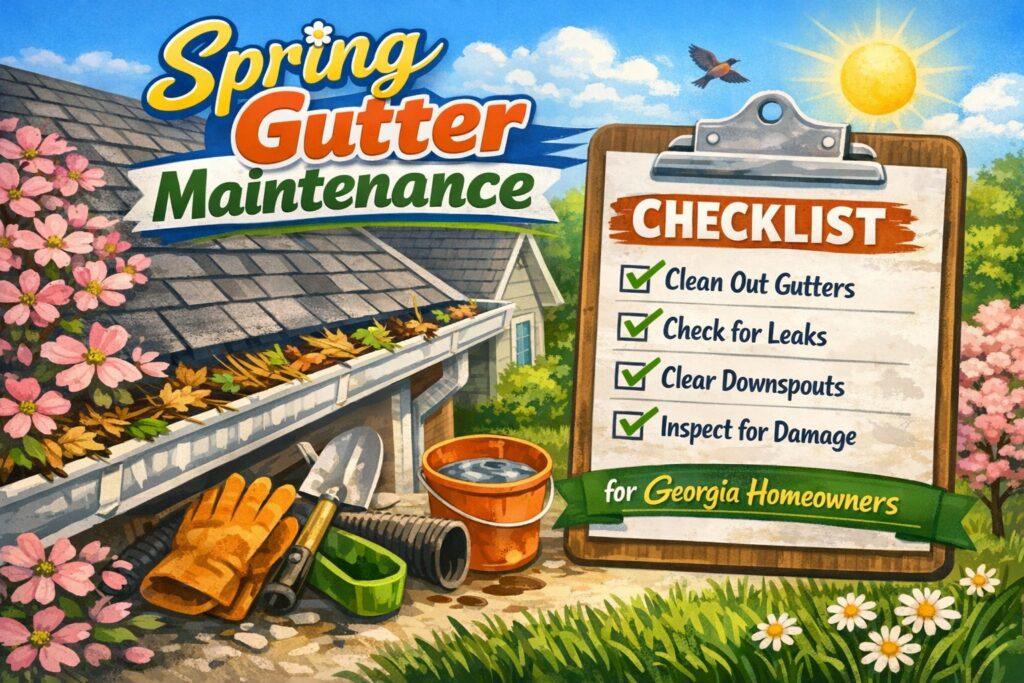
Cleaning is the first step in any spring gutter maintenance routine. Removing debris restores proper water flow and allows homeowners to inspect the system more clearly.
Use the following checklist when cleaning gutters in spring.
- Remove large debris by hand
Start by clearing leaves, twigs, and roof debris from the gutter channels. A small scoop or gloved hands usually works well for this step. - Check corners and gutter joints
Debris often collects where gutter sections connect or where corners change direction. These areas should be cleared carefully because blockages form easily here. - Flush the gutter channel with water
After removing debris, run water through the gutters using a garden hose. This helps wash out smaller dirt particles and roof grit. - Watch how water moves through the gutter
Water should flow smoothly toward the downspout. If water pools in one spot, the gutter may be sagging or incorrectly pitched. - Clear the downspout opening
If water backs up near the downspout, debris may be blocking the entry point. Remove the obstruction and flush again. - Check the ground drainage area
Water leaving the downspout should move away from the house. If water collects near the foundation, the downspout extension may need to be adjusted.
Cleaning alone solves many common gutter problems. Once debris is removed, the next step is inspecting the system for winter damage.
Also Read: How to Measure Gutters for Gutter Guards
How to Inspect Gutters for Winter Damage
Once debris is removed, the gutter system becomes easier to inspect. Winter weather can cause minor structural issues that are not visible until the gutters are cleaned.
Start by checking the alignment of the gutter channel. A straight gutter should sit firmly along the fascia board without dipping or pulling away from the roof edge. If a section appears lower than the rest, the hanger brackets may have loosened.
Next, examine the connection points. Gutter hangers and fasteners hold the system in place during heavy rain. When these become loose, the gutter can shift under the weight of water and debris.
Look closely for these signs of damage:
• gutters pulling away from the fascia
• loose or missing gutter hangers
• rust spots or corrosion on metal gutters
• small gaps at gutter seams
• water marks along the exterior wall
• paint damage near the gutter line
Seam areas deserve special attention. Over time, sealant inside the joints can weaken. During heavy rain, water may escape through these small openings instead of moving toward the downspout.
If several sections of the gutter show sagging or recurring leaks, the gutter may require repair rather than simple cleaning.
Also Read: How to Clean Gutters With Gutter Guards (Step-by-Step Guide for Homeowners)
Check Downspouts and Water Flow
Downspouts control how water leaves the gutter system. Even if gutters are clean, a blocked downspout can stop water from draining properly.
After flushing the gutters with a hose, watch the downspout outlet. Water should exit quickly and move away from the home.
If the flow is slow or stops completely, a clog may be inside the downspout. Leaves, roof grit, and seed pods often collect inside the vertical pipe where they form a tight blockage.
Homeowners can test downspouts using a simple process:
First, run water into the gutter near the downspout opening. If the water backs up, the blockage is likely inside the downspout.
Second, check the bottom outlet. If only a small amount of water comes out, the pipe may be partially clogged.
Third, inspect the downspout extension near the ground. The extension should direct water several feet away from the home to reduce moisture near the foundation.
Other signs of downspout problems include:
• water spilling over the gutter edge during rain
• soil erosion below the downspout outlet
• standing water near the home’s base
• repeated gutter overflow during storms
When downspouts are clear and working correctly, rainwater moves away from the roof and foundation without collecting around the structure.
Why You Need Full-Time Gutter Protection
Common Spring Gutter Problems Georgia Homeowners Face
Homes across Georgia often face specific types of gutter issues in the spring. Local trees, seasonal pollen, and early storms create conditions that quickly affect roof drainage systems.
One common issue is pine needle buildup. Pine trees drop needles throughout the year, but winter winds and early spring rain push large amounts of them onto roofs. These thin needles move easily into gutters and pack tightly inside downspouts.
Another problem is pollen accumulation. During spring, a thick layer of yellow pollen settles on roofs and inside gutters. When rain mixes with pollen, it forms a paste-like material that sticks to gutter walls and slows water flow.
Georgia homes also experience heavy spring storms. Strong rainfall can reveal problems that were hidden during winter. Gutters that appear stable in dry weather may overflow when heavy rain flows through the system.
Other problems commonly found during spring inspections include:
• gutters sagging from winter debris weight
• clogged downspouts from compacted organic material
• loose brackets caused by seasonal expansion and contraction
• small leaks along gutter seams
• water spilling over edges during heavy rainfall
If these problems are ignored, water may collect near the home and gradually damage the siding, fascia boards, and foundation.
Regular spring inspections help identify these issues early, before they develop into larger structural problems.
When to Call a Professional Gutter Service
Some maintenance tasks are manageable for homeowners, but certain gutter problems require professional inspection or repair.
For example, if gutters are pulling away from the roofline, the hanger system may need reinforcement or replacement. This type of repair often requires proper tools and safe ladder positioning.
Homes with multiple roof levels can also make gutter maintenance difficult. Cleaning upper sections safely usually requires professional equipment.
You should consider contacting a gutter professional if you notice:
• repeated gutter overflow during rain
• gutters separating from the fascia board
• multiple leaking seams
• downspouts that remain clogged after flushing
• standing water inside gutter sections
• visible damage along long gutter runs
A professional inspection can identify hidden problems that are difficult to see from ground level.
For homeowners in Georgia, services like gutter cleaning, repair, and gutter guard installation help maintain the entire roof drainage system before heavy spring rainfall begins.
If your gutters have not been inspected recently, scheduling a seasonal service with a local company such as Gflow Kennesaw Gutter Cleaning can ensure the system is cleaned, secured, and draining correctly.
Regular maintenance helps prevent water from collecting around the roofline and foundation, keeping the drainage system working as intended during the rainy season.
FAQS
What should be included in a spring gutter maintenance checklist?
A spring gutter maintenance checklist should include removing debris from the gutter channels, flushing the system with water, checking downspouts for blockages, inspecting gutter hangers and brackets, looking for seam leaks, and confirming that water flows away from the foundation. These steps help ensure the roof drainage system works correctly during heavy spring rain.
How often should gutters be cleaned in Georgia?
Most homes in Georgia benefit from gutter cleaning at least twice a year, usually in spring and fall. Homes surrounded by pine trees or heavy foliage may need more frequent cleaning because needles, leaves, and pollen accumulate quickly and can clog the drainage system.
Do gutters need maintenance if they have gutter guards?
Yes. Gutter guards reduce the amount of debris entering the gutter, but they do not eliminate maintenance. Small particles such as pollen, roof grit, and pine needles can still collect on the guards or in the gutter, so seasonal inspection and occasional cleaning are still necessary.
How do you know if your gutters are clogged?
Common signs of clogged gutters include water spilling over the sides during rain, slow drainage through the downspouts, standing water inside the gutter channel, and plants or weeds growing inside the gutters. These signs indicate debris buildup blocking normal water flow.
Can clogged gutters damage a home’s foundation?
Yes. When gutters overflow, rainwater flows directly to the ground near the home instead of draining through the downspouts. Over time, this can cause soil erosion, moisture buildup around the foundation, and potential structural issues.
What damage should you check for after winter?
After winter, homeowners should inspect gutters for sagging sections, loose hangers, rust spots, seam leaks, and gutters pulling away from the fascia board. Freezing temperatures and heavy debris can weaken gutter fasteners and create small leaks that appear during spring rain.
When should homeowners call a professional gutter service?
A professional service should be contacted if gutters are separating from the roofline, if multiple leaks are visible, if downspouts remain clogged after flushing, or if gutters overflow during rain, even after cleaning. Professional inspections can also identify hidden issues that are difficult to see from ground level.
How long does spring gutter maintenance usually take?
For most homes, basic spring gutter cleaning and inspection takes one to two hours, depending on the home’s size, roof height, and the amount of debris in the gutter system. Homes with multiple roof levels or heavy debris may take longer.