Pre-Winter Home Maintenance Tasks in Kennesaw can help homeowners prepare their properties for colder weather and avoid costly repairs. From checking the heating system and inspecting windows to protecting outdoor plumbing and cleaning important areas around the home, completing these tasks before winter can improve comfort, safety, and energy efficiency. If you’d rather have a local team handle the exterior side of this checklist, G-Flow Kennesaw covers gutter and drainage prep for homes across the area.
Table of Contents
Quick Answer: What Should Kennesaw Homeowners Check Before Winter?
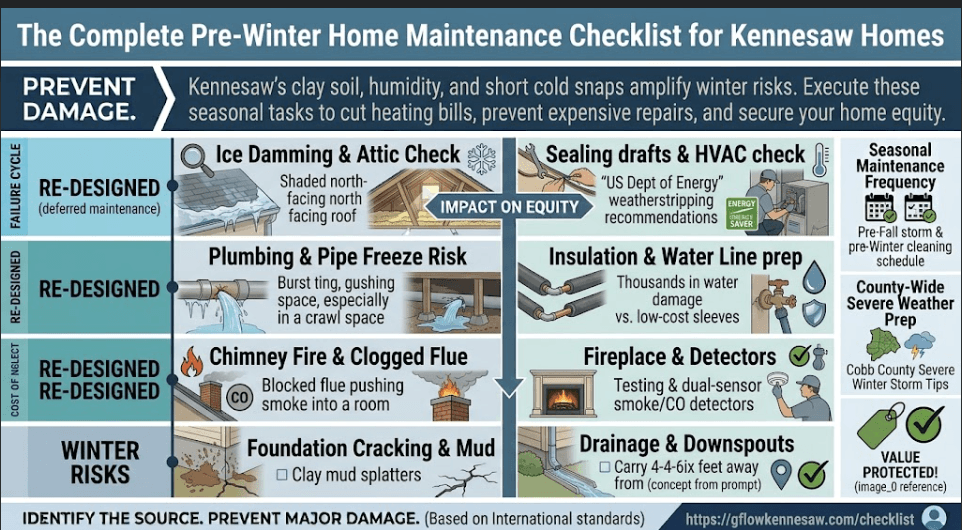
Before temperatures drop, Kennesaw homeowners should inspect the roof and attic insulation, seal gaps around windows and doors, schedule an HVAC tune-up, insulate exposed pipes, shut down outdoor faucets and irrigation lines, clear downspouts and drainage paths, and test smoke and carbon monoxide detectors. Most of these tasks take under an hour each and cost far less than repairing frozen pipes or a failed furnace mid-winter.
The Complete Pre-Winter Home Maintenance Checklist for Kennesaw Homes
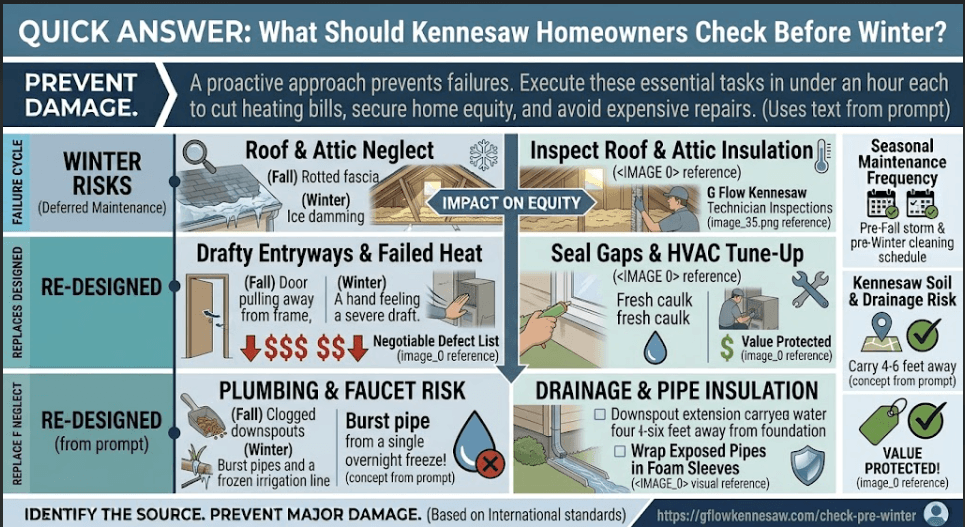
Cobb County winters aren’t brutal compared to the Midwest, but Kennesaw does see occasional hard freezes, ice accumulation on shaded roof sections, and sudden overnight temperature swings that catch homeowners off guard. That combination of clay-heavy soil, humidity, and short cold snaps makes certain maintenance tasks more urgent here than in drier climates.
1. Inspect the Roof and Attic
Walk the perimeter of your house and look for lifted, cracked, or missing shingles, especially on north-facing slopes that stay shaded longer and hold moisture. Inside the attic, check insulation depth and look for daylight coming through the roof deck, which signals gaps that let heat escape and cold air in. Poor attic insulation is one of the biggest contributors to ice damming on homes with steep or shaded rooflines.
2. Seal Windows, Doors, and Utility Penetrations
Run a hand along window and door frames on a windy day to feel for drafts. Replace worn weatherstripping and add fresh caulk around pipes, vents, and cable lines entering the house. This is a low-cost task that directly cuts heating bills once temperatures drop into the 30s overnight, which happens regularly in Kennesaw between December and February.
3. Schedule an HVAC and Furnace Tune-Up
Have a licensed technician inspect the furnace or heat pump, replace the air filter, and check the thermostat calibration before the first cold front. A furnace that hasn’t run since March can develop igniter or blower issues that only show up once you actually need heat. The U.S. Department of Energy’s Energy Saver program lists seasonal HVAC checkups and weatherstripping among the standard steps for cold-weather readiness.
4. Insulate Exposed Pipes and Shut Off Outdoor Water Lines
Pipes running through crawl spaces, garages, or exterior walls are the most common source of winter plumbing emergencies. Wrap exposed pipes with foam insulation sleeves, disconnect garden hoses, and drain and shut off irrigation systems before the first freeze warning. A burst pipe from a single overnight freeze can cause thousands of dollars in water damage, far more than the cost of foam sleeves and an afternoon of prep work.
5. Check the Chimney and Fireplace
If you use a wood-burning or gas fireplace during winter, have the chimney inspected and swept before first use. Creosote buildup from the previous season is a leading cause of chimney fires, and a blocked flue can also push carbon monoxide back into the house.
6. Clear Downspouts and Confirm Proper Drainage
Even after a full gutter cleaning, water needs somewhere to go once it leaves the downspout. Walk the yard after a rain and check that downspout extensions carry water at least four to six feet away from the foundation. Kennesaw’s clay soil doesn’t absorb water quickly, so poor drainage near the foundation is a common cause of basement dampness and cracked slabs once freeze-thaw cycles start. If your downspouts are clogged, misaligned, or draining straight against the foundation, a seasonal gutter cleaning and downspout check resolves both problems at once.
7. Trim Trees and Clear Debris Near the Roofline
Overhanging branches loaded with ice or heavy rain are a common cause of roof and gutter damage in North Georgia winters. Trim back limbs that hang within six feet of the roof, and clear leaf piles from window wells and crawl space vents before the ground freezes.
8. Test Smoke and Carbon Monoxide Detectors
Furnaces, fireplaces, and space heaters all run more during winter, which raises the risk of carbon monoxide exposure. Test every detector in the house, replace batteries, and confirm units are less than ten years old, since sensors degrade over time even if the unit still “works.”
9. Seal Driveway and Walkway Cracks
Water that seeps into small cracks in concrete or asphalt expands when it freezes, turning hairline cracks into major ones. A simple crack-filling job in the fall prevents a full driveway resurfacing job in the spring.
For broader seasonal readiness guidance, Cobb County’s winter storm preparedness tips outline additional steps for severe winter weather events specific to the area.
Why Gutters Still Matter in This Checklist
Every item above works better when water is actually being carried away from the roof and foundation correctly. A home with a freshly insulated attic and sealed windows can still suffer ice damming and water intrusion if the gutters are clogged or pitched incorrectly. That’s why most local contractors treat gutter cleaning as the first task on a pre-winter checklist rather than a separate one. Homeowners looking for a straightforward way to check this box, along with a general 20-point exterior review, can request a walkthrough from a Kennesaw gutter cleaning crew before booking any other winter service.
Frequently Asked Questions
When should I finish pre-winter home maintenance in Kennesaw?
Late October through mid-November is the ideal window, ahead of the season’s first hard freeze and before HVAC technicians and gutter crews get booked solid for the winter rush.
Do I need to winterize outdoor faucets in Georgia?
Yes. Even though Kennesaw winters are milder than northern states, overnight temperatures regularly dip below freezing from December through February, which is enough to burst an unprotected outdoor pipe or hose bib.
How often should attic insulation be checked?
Inspect attic insulation every one to two years, or sooner if you’ve noticed rising heating bills, ice buildup on the roof edge, or visible gaps around vents and recessed lighting.
Does clogged gutter drainage actually affect my foundation?
Yes. Water that overflows or backs up near the foundation during freeze-thaw cycles can seep into small cracks in the slab or crawl space walls, gradually worsening structural cracks over several seasons.
Is a furnace tune-up worth it if the system seems fine?
A tune-up catches minor issues, like a weak igniter or dirty flame sensor, before they turn into a no-heat emergency on the coldest night of the year. It’s a small cost compared to an emergency repair call.
Can I do all of these tasks myself?
Weatherstripping, pipe insulation, and detector testing are manageable DIY projects for most homeowners. Roof inspections, HVAC tune-ups, chimney sweeping, and gutter and downspout work are safer and more thorough when handled by a licensed or experienced local crew.
What’s the biggest mistake homeowners make with pre-winter prep?
Treating it as a single weekend project instead of a checklist spread across a few weeks. Rushing roof, gutter, and HVAC inspections into one day means problems get missed, especially on multi-story homes.