
If you’re selling a house in Cobb County, the gutters are one of the first things an inspector checks — and one of the easiest things to fix before that happens. Gutter cleaning in Kennesaw before a listing goes live can be the difference between a clean report and a list of “needs attention” flags that scare off buyers or trigger renegotiation.
Home inspectors don’t just glance at your gutters from the driveway. They trace water paths, check fascia boards for soft spots, and look for staining that points to long-term overflow. Clogged, sagging, or disconnected gutters show up in almost every category of a standard inspection report, from roof drainage to foundation moisture.
Table of Contents
Why Gutter Condition Shows Up on Almost Every Inspection Report
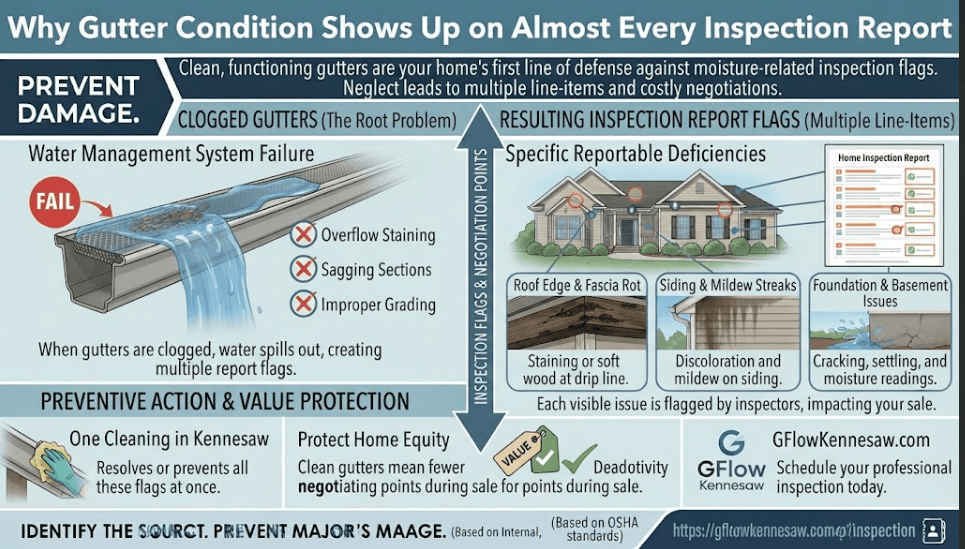
Quick Answer: Clean, properly functioning gutters reduce the number of “moisture-related” flags on a home inspection report. Inspectors specifically check for overflow staining, sagging sections, fascia rot, and foundation grading issues — all of which are directly tied to how well gutters have been maintained. A single gutter cleaning in Kennesaw can resolve or prevent several of these flags at once.
Inspectors are trained to treat gutters as part of the home’s water-management system, not just a cosmetic feature. When gutters are clogged with debris, water doesn’t flow to the downspouts — it spills over the sides, runs down the siding, and pools at the foundation. That single problem can generate multiple separate line items in a report:
- Fascia board staining or soft wood
- Siding discoloration or mildew streaks
- Foundation cracking or settling near downspout zones
- Basement or crawlspace moisture readings
- Roof edge rot at the drip line
A buyer’s inspector has no way of knowing whether these issues stem from years of neglect or a single missed cleaning season. They report what they see, and every flagged item becomes a negotiating point.
The Local Factor: Why Kennesaw Homes Are Especially Vulnerable
Kennesaw’s mix of mature hardwoods, pine trees, and clay-heavy soil creates a specific set of drainage challenges. Pine straw and oak leaves compact quickly in gutter channels, and once that debris holds water, it adds significant weight that stresses hangers and seams. On top of that, the region’s clay soil doesn’t absorb overflow water well — it tends to pool near the foundation instead of draining away, which is exactly the kind of moisture pattern inspectors flag on a report.
Homes near wooded lots in Kennesaw, Acworth, and the surrounding Cobb County area typically need gutter cleaning two to three times a year to stay ahead of this buildup, compared to twice a year in areas with less tree canopy.
What Inspectors Actually Look For
A residential inspector working from the Standards of Practice used by most certified home inspection associations will typically evaluate:
- Attachment and slope — Are gutters securely fastened and pitched correctly toward downspouts?
- Standing debris or water — Visible pooling is an automatic note in the report.
- Downspout discharge — Whether water is directed at least several feet away from the foundation.
- Fascia and soffit condition — Soft, discolored, or peeling wood behind the gutter line.
- Signs of past overflow — Streaking on siding or brick is a red flag even if the gutter looks fine that day.
For homeowners preparing to sell, these details matter more than they might expect. Guidance from the American Society of Home Inspectors notes that water management issues are among the most commonly cited deficiencies in residential inspections, which is why addressing gutter condition ahead of a listing is one of the highest-value, lowest-cost repairs a seller can make.
How Dirty Gutters Translate Into Negotiation Leverage for Buyers
Every item on an inspection report becomes a talking point during negotiations. Buyers — or their agents — use flagged issues to request price reductions, repair credits, or seller-funded fixes before closing. A report full of moisture-related notes, even minor ones, can make a buyer nervous about issues they can’t see, like foundation movement or mold behind drywall.
The cost asymmetry here is significant. A professional gutter cleaning in Kennesaw typically runs far less than the repair credit a buyer might request after seeing staining, soft fascia, or a damp crawlspace noted in their inspection packet. Sellers who address gutters proactively tend to walk into negotiations with a cleaner report and less ammunition on the buyer’s side.

Pre-Listing Gutter Checklist
Before your inspection is scheduled, walk the exterior and check for:
- Visible plant growth or dark sludge inside the gutter channel
- Water marks or dark streaks on the siding below the gutter line
- Sagging sections or gutters pulling away from the fascia
- Downspouts that dump water within a few feet of the foundation
- Standing water anywhere along the gutter run after a rain
If you notice two or more of these, it’s worth scheduling a cleaning and inspection of the system itself before the buyer’s inspector arrives — not after.
FAQs
How soon before a home inspection should gutters be cleaned?
Ideally, schedule gutter cleaning one to two weeks before your inspection date. This gives enough time to spot and repair any hidden damage — like fascia rot — that the cleaning reveals.
Can dirty gutters actually cause an inspection to fail?
Most residential inspections don’t have a strict “pass or fail” outcome, but clogged gutters generate flagged items that buyers can use to request repairs or price reductions, which functions the same way in a negotiation.
Do inspectors check gutters during rain?
Some do, since active overflow is easier to spot during or right after rainfall. Inspectors scheduled during dry weather rely more on staining, debris buildup, and fascia condition to judge gutter performance.
Will a seamless gutter system reduce inspection flags compared to sectional gutters?
Seamless systems have fewer joints, which means fewer potential leak points for an inspector to note. They don’t eliminate the need for cleaning, but they do reduce one category of common deficiency.
Does gutter cleaning help with foundation-related inspection notes?
Yes. A large share of foundation moisture flags trace back to water overflowing gutters near the foundation line rather than actual structural settling. Clearing and redirecting that water is often the fix.
How often should Kennesaw homeowners clean their gutters to stay ahead of inspection issues?
Given the area’s tree cover, two to three cleanings per year is the general recommendation — spring and fall at minimum, with a mid-summer check for homes under heavy pine coverage.
If your home is heading toward a sale or you just want to rule out gutter-related issues before they show up on paper, professional gutter cleaning services in Kennesaw can get your system inspection-ready and catch fascia or drainage problems while they’re still easy to fix.