
North Georgia doesn’t get Minnesota winters, but a single freezing-rain night can wreck a gutter system that looked fine the day before. Most ice damage here starts in fall, when leaves pile up and hold water. Gutter cleaning in Kennesaw before the first hard freeze is the cheapest way to avoid sagging runs, split seams, and fascia rot. This guide covers how ice damages gutters in our climate, what to check, and what repairs cost. It’s written for homeowners served by G Flow Kennesaw.
Table of Contents
Quick Answer: Can Ice Really Damage Gutters in Kennesaw?
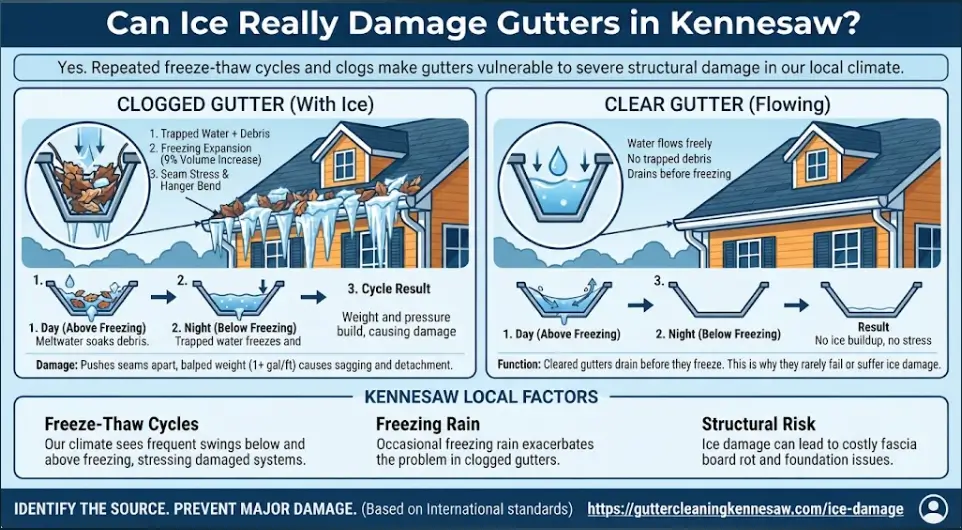
Yes. Kennesaw sees repeated freeze-thaw cycles and occasional freezing rain. Water left in a clogged gutter freezes, expands about 9%, and pushes seams apart, bends hangers, and pulls the gutter away from the fascia board. A gutter full of leaves can hold well over a gallon of water per foot, and once frozen, that weight is what causes sagging and detachment. Clear gutters drain before they freeze, which is why they rarely fail.
Why North Georgia Winters Are Hard on Gutters
Deep-snow regions design gutters for steady cold. Here the problem is the swing. Daytime highs in the 50s followed by nights in the 20s mean water melts, runs, and refreezes over and over.
Three local factors make it worse:
- Late leaf drop. Oaks, sweetgums, and maples around Kennesaw keep dropping into December, so gutters are often full right when the first freeze arrives.
- Pine straw and sweetgum balls. They pack tightly at downspout openings and form a plug that holds water.
- Freezing rain. Ice coats gutters, shingles, and tree limbs at once. Limbs then fall onto gutter runs, adding impact damage on top of the ice load.
The National Weather Service office in Peachtree City issues winter weather advisories for our area, and it’s worth watching before a cold snap: weather.gov/ffc.
The 6 Most Common Ice-Related Gutter Problems
- Sagging or pulled-away runs. Frozen water adds heavy weight. Old spike-and-ferrule hangers loosen first.
- Split seams. Sectional gutters leak at joints after a few freeze cycles. Seamless gutters resist this because there are fewer joints.
- Cracked downspout elbows. Water sits in the bends, freezes, and splits the metal or vinyl.
- Fascia board rot. Overflow that freezes and thaws against the fascia soaks the wood. It often looks fine until you press on it with a screwdriver.
- Icicles at eaves. Long icicles mean water is spilling over instead of draining. They’re a sign of a clog, not just a cold night.
- Foundation and landscape washout. When a downspout is frozen shut, water pours over the gutter edge and pools beside the foundation.
Ice dams (ice ridges on the roof edge) are uncommon in Georgia. When they do appear, poor attic insulation is usually the cause, not the gutters themselves.
Temperature Danger Zones
| Overnight low | What happens | Gutter risk |
|---|---|---|
| 33–38°F | Frost on roof, no freezing | Low |
| 28–32°F | Standing water freezes in clogged sections | Moderate |
| 20–27°F | Downspouts freeze solid, seams stress | High |
| Freezing rain at any temp | Ice coats everything, limbs fall | Highest |
Why Gutter Cleaning in Kennesaw Comes Before Every Other Winter Prep Step
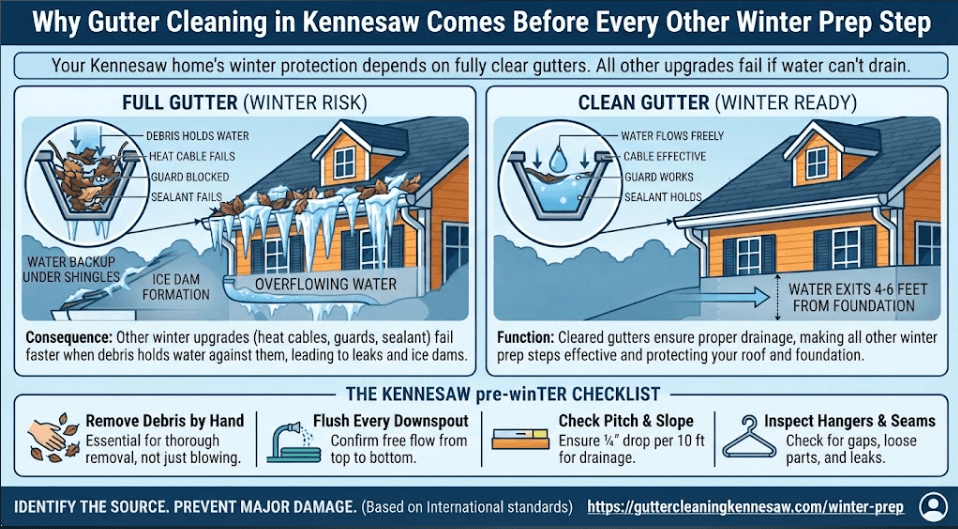
Nothing else you do matters if the gutters are full. Heat cables, guards, and sealant all fail faster when debris holds water against them.
A good pre-winter cleaning should include:
- Removing all debris by hand, not just blowing it around
- Flushing every downspout until water runs freely
- Checking that water exits at least 4 to 6 feet from the foundation
- Inspecting hangers, seams, and end caps for gaps
- Confirming the gutter pitch (about ¼ inch drop per 10 feet) so water doesn’t pool
If you want it done right, professional gutter services in Kennesaw can handle the cleaning and flag repair issues in the same visit.
Local Timeline: When to Act
- Late October to mid-November: Book cleaning after most leaves have dropped, not before.
- Early December: Do a second quick check if you have large oaks or pines overhead.
- Before any forecast below 28°F: Confirm downspouts are open and outlets are clear.
- After freezing rain: Walk the perimeter once temperatures rise. Look for bent runs and displaced downspouts.
DIY Troubleshooting After an Ice Event
Check these from the ground first, and use a ladder only if it’s dry and safe.
- Gutter pulled away from the roofline: Look for a visible gap or a drooping middle section. Don’t hang from it or push it back while frozen, since cold metal and vinyl crack.
- Water spilling over the edge: A clog or frozen downspout is the cause. Wait for a thaw, then flush with a hose.
- Ice at the downspout base: Pour warm (not boiling) water at the outlet to open it. Boiling water can crack vinyl.
- Dripping at joints: Note the location. It’s a seam failure and needs resealing or a section replacement.
- Soft or dark fascia: Wood rot. Call for an inspection before the next rain.
Federal guidance on winter storm readiness is available at ready.gov/winter-weather.
Typical Repair and Cleaning Costs
These are general ranges. Actual pricing depends on home height, roof pitch, and access.
| Service | Typical range |
|---|---|
| Single-story gutter cleaning | $100–$250 |
| Two-story gutter cleaning | $175–$400 |
| Reseal leaking seams | $75–$200 |
| Re-hang sagging section | $150–$400 |
| Downspout replacement | $75–$200 each |
| Fascia board repair | $200–$700+ |
| Seamless gutter replacement (whole home) | $1,500–$4,500+ |
Cleaning is the smallest line item, and fascia and full replacement are the largest. That gap is the reason to clean first. For a written quote, see G Flow Kennesaw.
Should You Install Gutter Guards or Heat Cables?
Gutter guards reduce leaf buildup, but pine needles and shingle grit still get through some designs. They still need occasional cleaning.
Heat cables help in regions with heavy snow. In Kennesaw they’re rarely worth it, because our ice events are short. Clean gutters and properly sloped runs usually do the job.
Seamless gutters are the best upgrade for our freeze-thaw pattern. Fewer seams mean fewer places for ice to pry open. Compare options at https://gflowkennesaw.com/.
When to Call a Professional
Call if you see:
- A gutter run that has visibly dropped or separated from the fascia
- Repeated overflow after cleaning
- Soft, dark, or peeling fascia
- Cracked downspouts or elbows
- Water pooling at the foundation after rain
Serving the greater Kennesaw community, G Flow Kennesaw can inspect, clean, and repair in one visit. Call [add phone number] to schedule. For more detail, learn more here.
Frequently Asked Questions
Does it get cold enough in Kennesaw to damage gutters?
Yes. Overnight lows in the 20s a few times each winter, plus freezing rain, are enough to freeze standing water and stress seams and hangers.
How do I know if my gutters are damaged by ice?
Look for sagging sections, gaps between the gutter and fascia, split seams, bent downspouts, and water overflowing during the next rain.
Should I knock icicles off my gutters?
No. You can bend the gutter or hurt yourself. Let them melt, then find out why water was overflowing. It’s almost always a clog.
Can frozen gutters cause roof leaks?
Rarely in Georgia, but backed-up water can reach the roof edge and soak the fascia and soffit, which leads to interior moisture problems.
How often should gutters be cleaned in Kennesaw?
Twice a year is standard, once after leaf drop in late fall and once in spring. Homes under heavy tree cover may need a third cleaning.
Are seamless gutters better in freezing weather?
Generally yes. With no seams along the run, there are fewer weak points for expanding ice to open.
Is it safe to use hot water on frozen downspouts?
Warm water is fine. Boiling water can crack vinyl and warp thin aluminum.
What does it cost to fix ice-damaged gutters?
Minor fixes like resealing seams run about $75–$200. Re-hanging a sagging section or replacing downspouts costs more, and fascia repair or a full replacement costs the most.
When is the best time to schedule pre-winter gutter cleaning?
After the bulk of leaves fall, typically mid-November to early December, and before the first forecast of sustained freezing temperatures.