
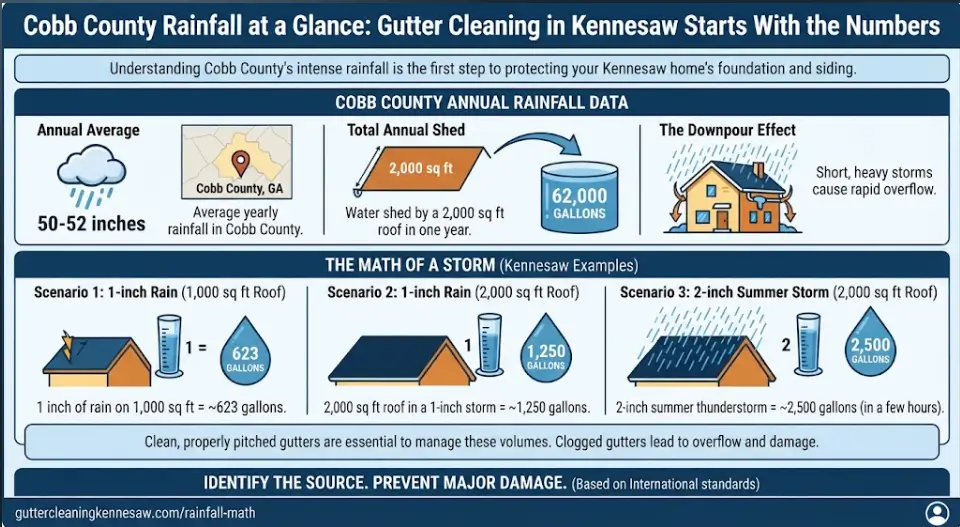
Cobb County gets roughly 50 to 52 inches of rain a year, which is more than most of the country. For a typical Kennesaw roof, that is tens of thousands of gallons every year that your gutters have to move away from the house. Regular gutter cleaning in Kennesaw is what keeps that water from soaking your fascia, foundation, and landscaping. Below, you’ll see what the numbers look like, how they play out on your roof, and what to do about it.
Rainfall figures are approximate long-term averages. Check the National Weather Service Peachtree City office for current forecasts and the NOAA climate data portal for exact local records.
Table of Contents
Cobb County Rainfall at a Glance: Gutter Cleaning in Kennesaw Starts With the Numbers
Quick Answer: How much rain does Cobb County get, and how does it affect gutters? Cobb County averages about 50 to 52 inches of rain per year, spread across all four seasons. A 2,000-square-foot roof footprint sheds roughly 62,000 gallons of water annually. Because storms here often arrive as short, heavy downpours, clogged gutters overflow quickly and send water straight down the siding and into the soil.
Here is the math that makes those numbers real:
- 1 inch of rain on 1,000 sq ft of roof = about 623 gallons.
- A 2,000 sq ft roof in a 1-inch storm = about 1,250 gallons headed for your gutters.
- A 2-inch summer thunderstorm = about 2,500 gallons in a few hours.
Gutters sized for ordinary rain can handle this when they are clean and properly pitched. When they are packed with debris, the water has nowhere to go but over the edgew Rainfall Changes Through the Year in Kennesaw
Georgia’s rain is not evenly distributed, and each season creates a different gutter problem.
Late winter through spring. This is typically the wettest stretch of the year. Long, soaking systems keep gutters full for days. Spring is also when pine and oak pollen coats everything, and it turns into a thick paste once wet. That paste settles at the bottom of the gutter channel and traps seeds and shingle grit.
Summer. Afternoon thunderstorms bring the highest rainfall intensity. A gutter that handles a drizzle fine can overflow in minutes during a downpour if the downspout is partly blocked. Summer storms also knock loose twigs and green debris that land right at the downspout opening.
Fall. Fall is usually the driest part of the year, but it is when oak, maple, and sweetgum leaves fill gutters. Those leaves sit dry for weeks, then get saturated by the first big rain of November or December. That is why many homeowners discover a clog only after the first wet cold front.
Early winter. Cold rain and occasional freezing nights can turn standing water in a clogged gutter into ice. The extra weight pulls gutters away from the fascia board.
What Happens When Gutters Can’t Keep Up
Heavy rainfall on clogged gutters causes predictable damage in Cobb County homes:
- Fascia board rot. Water spilling over the gutter lip soaks the wood behind it. Soft, dark, or peeling fascia is the first visible warning.
- Foundation erosion. Much of the area sits on red clay. Clay swells when wet and shrinks when dry, so water dumped beside the foundation can shift soil and contribute to cracks and settling.
- Basement and crawlspace moisture. Overflow collects along the foundation and finds its way inside. Musty smells after rain are a common sign.
- Sagging gutters. A gutter full of wet debris can weigh far more than an empty one. The extra load stresses the hangers and pulls the run out of pitch.
- Landscape washout. Concentrated overflow carves trenches through mulch and flower beds.
- Pest problems. Standing water in clogged gutters breeds mosquitoes within days in warm weather.
How to Tell If Your Gutters Are Struggling With Rainfall
You do not need a ladder to spot trouble. Watch your roofline during the next heavy rain:
- Water pouring over the front edge instead of flowing to the downspout
- Water streaming down the siding behind the gutter
- Downspouts that stay dry while the gutter is full, which usually means a clog inside the downspout
- Muddy splash marks or a trench along the foundation
- Plants growing out of the gutter, a sure sign of packed debris
- Gutter sections pulling away from the roofline or visibly bowed
If you spot any of these, a professional can inspect the run, clear the debris, flush the downspouts, and check pitch. You can learn more about GFlow Kennesaw and the services available in the area.
Gutter Cleaning Schedule for Cobb County Conditions
Generic advice says to clean twice a year. Local tree cover and rainfall make a better schedule possible:
| Home Situation | Recommended Frequency |
|---|---|
| Few or no trees nearby | 2 times per year (late spring, late fall) |
| Mature oaks or maples overhead | 3 times per year (add early summer) |
| Heavy pine coverage | 3 to 4 times per year (needles pack tightly) |
| Gutters with guards installed | Inspect twice per year, clean as needed |
Timing matters as much as frequency. The best window for the fall cleaning is after most leaves have dropped but before the first long December rain. For the spring cleaning, aim for after the heavy pollen release.
Gutter Setup Matters as Much as Cleaning
Rainfall of this volume exposes weak points in the gutter system itself.
Gutter size. Many older homes have 5-inch gutters. On large or steeply pitched roofs, 6-inch gutters move noticeably more water and handle intense summer downpours better.
Downspout count. A common rule of thumb is one downspout for every 30 to 40 feet of gutter run. Long runs with a single downspout are the first to overflow.
Pitch. Gutters should slope slightly toward the downspout, about a quarter inch for every 10 feet. Standing water along the run means the pitch has shifted, and downspout realignment or re-hanging may be needed.
Discharge point. Downspouts should release water at least 4 to 6 feet from the foundation. Extensions or buried drain lines keep clay soil from absorbing runoff beside the house.
Seamless gutters. Fewer joints mean fewer leak points under heavy flow. Seamless aluminum is the common choice for this reason.
Simple Checks You Can Do After a Big Storm
After a heavy rain, take five minutes:
- Walk the perimeter and look for water marks on siding below the gutters.
- Run a garden hose into each downspout and confirm water exits freely at the bottom.
- Look at the soil near each downspout for pooling or washed-out channels.
- Check the fascia board from the ground for dark staining or soft spots.
If water backs up when you run the hose, the clog is in the downspout, not just the gutter. That usually needs a professional flush rather than a quick scoop. For help, reach out to professional gutter cleaning near Kennesaw before a small clog becomes a repair bill.
Why Waiting Costs More
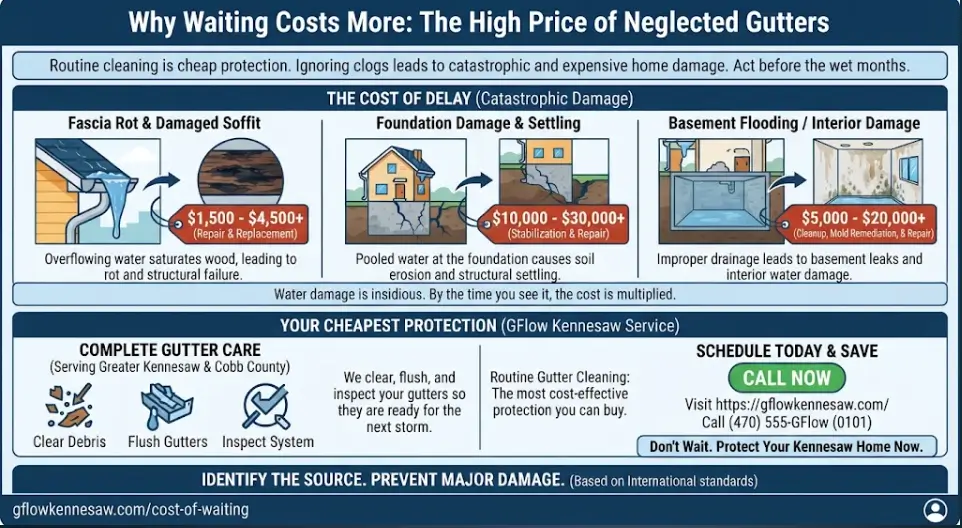
Water damage rarely announces itself. A clog that leads to fascia rot, a damaged soffit, or a settling foundation can cost many times more to fix than routine cleaning. Rainfall in this region does not give gutters a break, so keeping them clear before the wet months is the cheapest protection a homeowner can buy. Serving the greater Kennesaw and Cobb County community, GFlow Kennesaw can clear, flush, and inspect your gutters so they are ready for the next storm. Visit https://gflowkennesaw.com/ or call today to schedule.
Frequently Asked Questions
How much rain does Cobb County, GA get per year?
Cobb County averages roughly 50 to 52 inches of rainfall annually, with some variation between years. Individual storms can drop several inches in a day.
How much water does a roof shed in a 1-inch rain?
About 0.62 gallons per square foot of roof. A 2,000 sq ft roof footprint sends roughly 1,250 gallons into the gutters in a 1-inch rain.
Do gutter guards eliminate cleaning?
No. Guards reduce large debris, but pollen, grit, and fine needles can still build up. Plan to inspect and clean guarded gutters at least once or twice a year.
Which season is hardest on gutters in Kennesaw?
Spring and summer bring the highest rain volume and intensity, while fall brings the heaviest debris load. Fall leaves that sit until the first big rain cause many of the overflow problems homeowners notice in winter.
How often should gutters be cleaned in Cobb County?
Most homes need cleaning at least twice a year. Homes under oaks, maples, or pines usually need three or four cleanings.
What are the signs my gutters are overflowing?
Water spilling over the edge during rain, streaks on siding, a dry downspout while the gutter is full, soil washout near the foundation, and stained fascia boards.
Can clogged gutters damage my foundation?
Yes. Overflow dumps concentrated water next to the house. In red clay soil, that can contribute to erosion, settling, and moisture entering basements or crawlspaces.
How far should downspouts discharge from the house?
At least 4 to 6 feet away from the foundation, using extensions or underground drain lines.
Are 6-inch gutters worth it in Georgia?
For larger roofs, steep pitches, or homes that have overflowed during storms, 6-inch gutters carry noticeably more water and are a worthwhile upgrade.
What is the best time of year to clean gutters in Kennesaw?
Late spring after pollen season and late fall after leaves drop are the two most important windows. Homes with heavy tree cover benefit from an added early-summer cleaning.
Why do my gutters overflow even when they look clean?
The downspout may be blocked, the gutter pitch may have shifted, or there may be too few downspouts for the length of the run. A hose test and a pitch check will usually reveal which one.
Does gutter cleaning prevent fascia board rot?
It greatly lowers the risk. Rot starts when overflow keeps the fascia wet, so keeping water in the gutter and out of the wood removes the main cause.