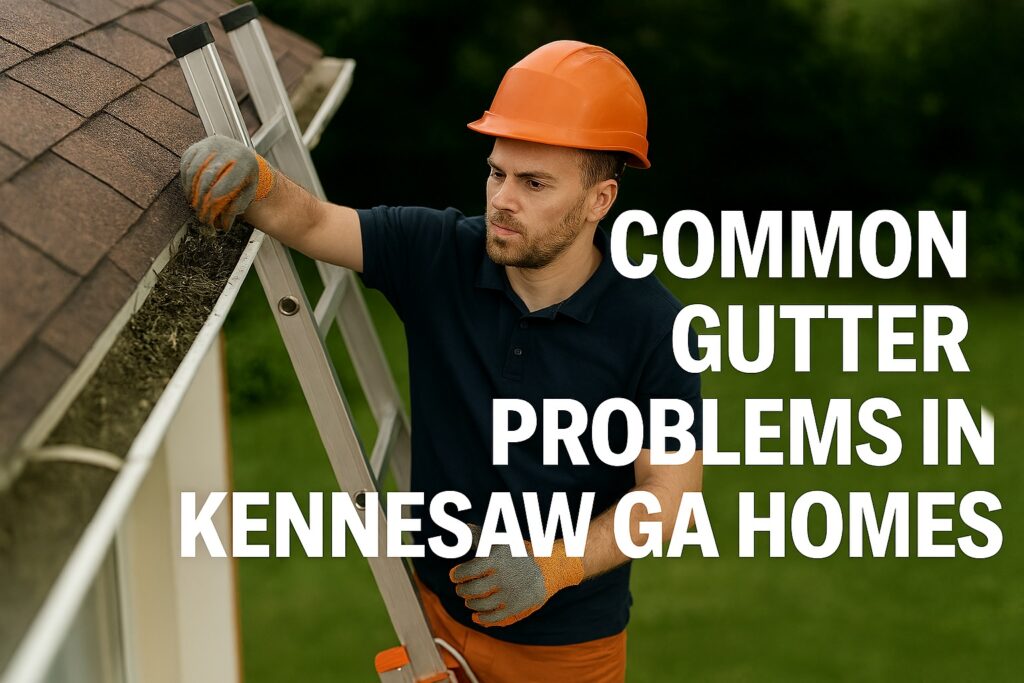
Homeowners in Kennesaw face gutter problems more often than in many other areas because
Kennesaw City weather and local conditions
. Heavy rain, tall trees, and long humid seasons put stress on roof drainage systems. When gutters fail, water does not move away from the house. It spills near walls and foundations and slowly damages the structure.
This guide explains the most common gutter problems seen in local homes, why they happen, and what signs to watch for. It is written for homeowners who want to prevent costly repairs and keep their property safe.
Why Gutters Fail More Often in Kennesaw
Homes in Cobb County are exposed to frequent rainstorms, falling leaves, and pine needles. Summers are long and humid, which speeds up rust and mold growth. Many neighborhoods also have mature trees that drop debris year-round.
In Georgia, short heavy storms can dump a lot of water in minutes. If gutters are clogged or poorly sloped, they overflow fast. Over time, this causes roof edge rot, soil erosion, and cracks near the foundation.
Local conditions make gutter care more important than in dry or low-tree areas.
Also read: Signs Your Gutters Need Repair or Replacement In Kennesaw GA
Table of Contents
Most Common Gutter Problems in Kennesaw Homes
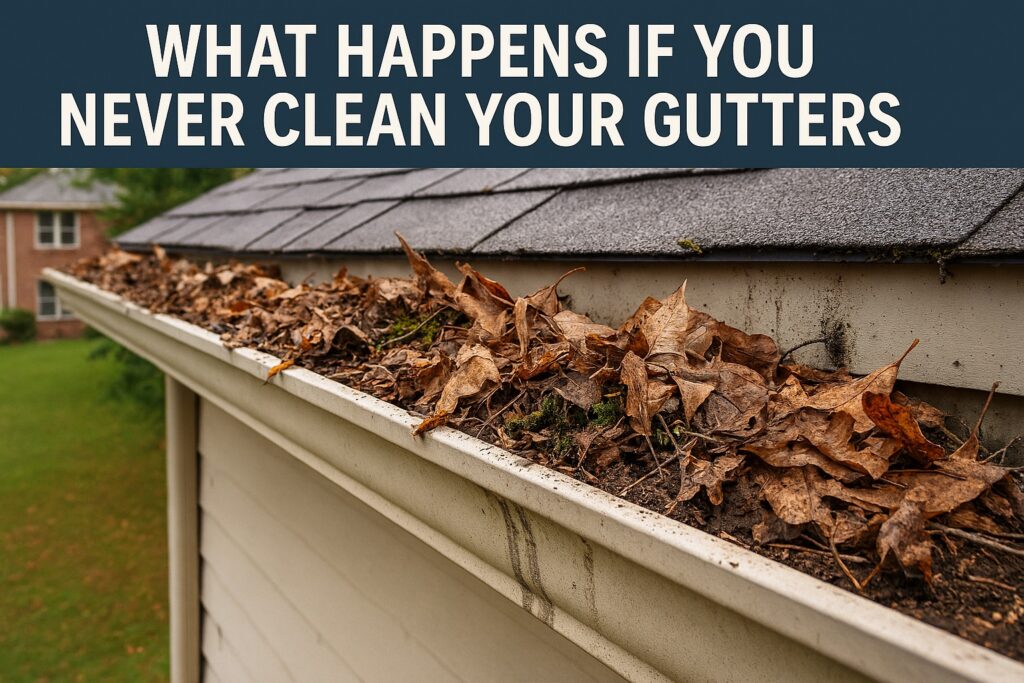
1. Clogged Gutters from Leaves and Pine Needles
This is the most frequent issue. Pine needles and small leaves pack tightly inside gutters and block water flow.
Causes
- Nearby pine and oak trees
- Infrequent cleaning
- Small or narrow gutter channels
Warning signs
- Water spilling over the sides
- Plants growing inside gutters
- Dark streaks on siding
Risks
- Roof edge rot
- Mosquito breeding
- Ice damage on winter nights
Clogs force water to run where it should not. This slowly weakens wood and attracts insects.
2. Sagging or Pulling Away from the Roof
When gutters stay full of wet debris, they become heavy. The fasteners loosen, and the gutter line drops.
Causes
- Extra weight from trapped water
- Old brackets
- Weak fascia boards
Warning signs
- Visible dip in the gutter line
- Gaps between the gutter and the roof
- Water dripping behind the gutter
Risks
- Water is soaking the wall
- Wood rot under the roof edge
- Higher chance of full detachment
Once sagging starts, water no longer flows toward downspouts. This makes all other problems worse.
3. Poor Water Flow and Overflow
Even when gutters are not fully clogged, water may not move correctly. This happens when gutters are installed with the wrong slope or when downspouts are blocked.
Causes
- Improper pitch during installation
- Debris inside downspouts
- Too few downspouts for the roof size
Warning signs
- Water spilling over during rain
- Pooled water near the house
- Stains on siding
Risks
- Soil erosion
- Basement moisture
- Cracks near the foundation
In heavy Georgia storms, poor drainage can cause damage within a single season.
4. Leaks, Cracks, and Rust
Older gutters often develop small cracks or rust holes. Humid air and standing water speed up metal decay.
Causes
- Age and weather exposure
- Poor sealing at joints
- Long-term moisture contact
Warning signs
- Drips during rain
- Rust spots
- Peeling paint below gutters
Risks
- Hidden wood damage
- Mold growth
- Structural weakening
Small leaks are easy to ignore, but they spread water into the roof boards and walls.
5. Foundation and Soil Damage
When gutters fail, water falls directly beside the house. Over time, this weakens the soil and shifts the foundation.
Causes
- Overflowing gutters
- Short or missing downspouts
- Constant water runoff
Warning signs
- Cracks in walkways
- Uneven ground
- Damp basement walls
Risks
- Expensive foundation repair
- Interior water damage
- Long-term home value loss
Foundation damage is one of the most costly results of bad gutter systems.
6. Mold, Mildew, and Pest Problems
Standing water inside clogged gutters creates a perfect place for mold and insects.
Causes
- Trapped moisture
- Warm temperatures
- Debris buildup
Warning signs
- Green or black stains
- Mosquito activity
- Musty smell near roof edges
Risks
- Health concerns
- Damage to siding
- Spread of mold into attic spaces
These problems grow fast in warm, wet seasons
Batch 3
7. Gutter Guard Problems
Gutter guards are meant to reduce debris, but they are not problem-free. In areas with pine needles and small leaves, many guards clog on top instead of inside the gutter.
Causes
- Fine debris slipping through
- Guards installation at the wrong angle
- Low-quality materials
Warning signs
- Water shooting over the gutter edge
- Debris is sitting on top of the guards
- Overflow during light rain
Risks
- False sense of protection
- Hidden blockages
- Continued water damage
Gutter guards still need regular checks, especially in tree-heavy neighborhoods.
What Happens If These Problems Are Ignored
Ignoring gutter problems allows water to damage key parts of the home.
Common results
- Rotting roof edges
- Stained siding and walls
- Basement leaks
- Cracked foundations
- Ruined landscaping
Gutter Repair costs grow fast when water keeps flowing in the wrong direction. A simple clog can turn into a major structural repair within a few years.
Preventive Maintenance for Kennesaw Homeowners
Simple care reduces most gutter problems.
Recommended actions
- Clean gutters at least twice a year
- Check after major storms
- Make sure downspouts push water away from the house
- Look for sagging or leaks
- Trim nearby tree branches
Homes near pine trees may need cleaning more often. Regular checks help catch small issues before they become serious.
When to Call a Professional Gutter Service
Some gutter problems can be seen from the ground, but others need trained inspection. A professional service is needed when issues affect the roof, walls, or foundation.
Call a professional if you notice
- Gutters pulling away from the roof
- постоян leaks even after cleaning
- Water is entering the basement
- Large rust areas or cracks
- Repeated clogs within weeks
Professionals check slope, joints, fasteners, and downspout flow. They can fix hidden problems before they turn into major damage.
Choosing the Right Gutter System for Local Homes
Not all gutter systems work well for homes with heavy rain and tree cover.
Key factors to consider
- Material: Aluminum is common because it resists rust and is lightweight
- Seamless gutters: Fewer joints mean fewer leaks
- Downspout size: Larger downspouts handle storm water better
- Gutter guards: Best for leaf control, but still need inspection
A system should match roof size and local weather, not just budget.
FAQ
How often should gutters be cleaned in Georgia?
At least twice a year to prevent water and foundation damage. Homes near trees may need cleaning every three to four months.
What are the main signs gutters need repair?
Overflowing water, sagging lines, rust spots, and stains on siding are clear signs.
Are gutter guards worth installing?
Gutter guards help reduce large debris, but do not stop all clogs. They still require maintenance and cleaning to get your gutter running properly.
Can clogged gutters damage the foundation?
Yes. Water falling next to the house weakens the soil and can cause cracks over time
Conclusion
Gutter problems in local homes usually start small but grow fast. Clogs, leaks, and sagging systems allow water to damage roofs, walls, and foundations. Regular cleaning and early repair prevent these risks and protect home value.
If you see any warning signs, schedule a professional gutter inspection. A simple service today can save thousands in repairs later. Keeping gutters clear is one of the easiest ways to protect your home year-round.