
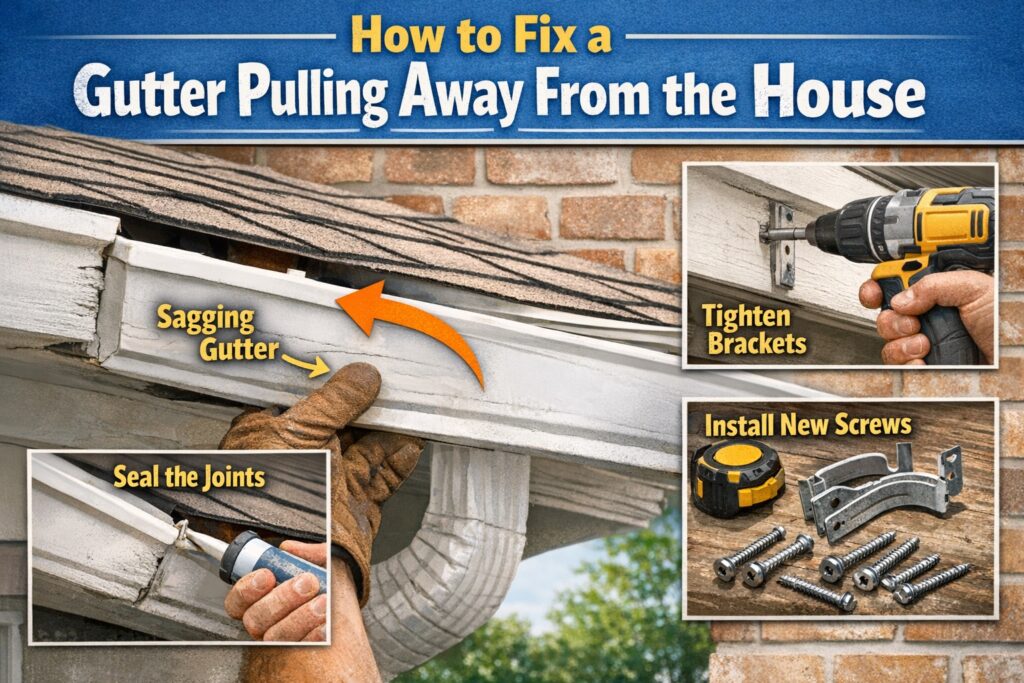
A gutter that starts pulling away from the house is more than a small cosmetic issue. Once the gutter separates from the fascia board, rainwater can spill along the roof edge instead of moving through the drainage system. This can lead to siding stains, foundation moisture, and soil erosion near the home’s base. Maintaining and cleaning the gutters keeps your foundation safe and sound
Many homeowners notice the issue after heavy rain or when a section of the gutter begins to sag. The gap between the gutter and the roofline usually forms because the fasteners loosen, debris adds weight, or the fascia board weakens.
The good news is that many cases can be fixed without replacing the entire gutter system. With basic tools and the right approach, a loose section can often be secured again and restored to proper slope so water flows toward the downspout.
Understanding the cause is the first step before attempting gutter repair.
Why Gutters Pull Away From the House
Several mechanical issues can cause gutters to separate from the roofline. In most cases, the failure occurs where the gutter attaches to the fascia board.
Loose or failing gutter hangers
Modern gutters rely on metal hangers or brackets that fasten the gutter to the fascia. If the screws loosen or the hangers bend under weight, the gutter begins to sag. Older systems often use spike-and-ferrule fasteners, which can gradually slide out of the wood.
Clogged gutters adding excess weight
Leaves, twigs, and roof debris collect inside the gutter channel. When rainwater fills the clogged section, the added weight can pull the gutter downward. Over time this stress causes fasteners to loosen and sections to separate from the house.
Rotting fascia boards
The fascia board is the long wooden board behind the gutter. If moisture damages this board, the wood becomes soft and cannot hold screws or spikes securely. When this happens the gutter fasteners pull out easily.
Improper hanger spacing
Gutter hangers should normally be spaced around 18 to 24 inches apart. If the spacing is wider, the gutter lacks support and begins to bow in the middle.
Incorrect gutter slope
A gutter must tilt slightly toward the downspout. If the slope is incorrect, water collects in low spots instead of draining. Standing water increases the load on the gutter and can eventually pull it away from the fascia. So getting rid of standing water is very crucial for your gutter health
Signs Your Gutters Are Pulling Away
The early signs are usually visible from the ground if you look along the roof edge. These signs tell you should replace or repair your gutter
Visible gap between gutter and fascia
One of the clearest signs is a small gap forming between the gutter and the board behind it. This gap may appear in the middle of the run or near the downspout.
Sagging gutter sections
When hangers loosen, the gutter begins to dip between support points. The sag becomes more noticeable after rainfall when water collects in the low section.
Water spilling over the front edge
If the gutter is no longer level or securely attached, rainwater may pour over the front edge instead of flowing toward the downspout.
Fasteners sticking out
Spikes or screws that start backing out of the fascia indicate that the gutter system is losing support.
Uneven gutter line along the roof
When viewed from a distance, the gutter should form a straight line. If the line appears wavy or uneven, one or more sections may be pulling away.
Step-by-Step: How to Fix a Gutter Pulling Away From the House
Most loose gutter sections can be repaired by cleaning the gutter, replacing weak fasteners, and restoring proper support along the fascia. The process does not require complex tools, but the ladder must be stable and the work area should be dry.
Clean the gutter before starting
Begin by removing leaves, dirt, and roof debris from the gutter channel. Debris adds weight and can hide the location where the gutter has separated. Use a small scoop or gloved hands to clear the material. After removing debris, run water through the gutter to confirm it drains toward the downspout.
Inspect the gutter hangers and fasteners
Look along the gutter for loose screws, pulled spikes, or bent hangers. Many older systems use spike-and-ferrule fasteners that pass through the gutter into the fascia board. These often loosen over time. Modern hidden hangers with screws hold the gutter more securely.
Tighten or replace the fasteners
If the screws are still gripping solid wood, tightening them may pull the gutter back into position. When spikes have loosened or pulled out, replace them with long gutter screws designed for fascia boards. Screws provide stronger holding power than smooth spikes.
Install new gutter hangers where support is weak
If the gutter bows between supports, add additional hangers along that section. In most systems, hangers should sit roughly every 18–24 inches. Adding extra support prevents the gutter from sagging again during heavy rain.
Adjust the gutter slope toward the downspout
The gutter should tilt slightly so water flows toward the downspout. If a section sits level or slopes the wrong way, loosen the hangers and reposition the gutter slightly higher or lower until water drains correctly.
Test the drainage system
Once the gutter is secured, run water through the system using a hose. Watch how the water moves along the channel and confirm that it reaches the downspout without pooling.
What to Do if the Fascia Board Is Damaged
Sometimes the gutter itself is not the real problem. The issue may be the fascia board that supports the gutter system.
Check the wood behind the gutter fasteners
If screws or spikes pull out easily, the wood may be weakened by moisture. Press the area gently with a screwdriver. Soft wood or crumbling edges indicate rot.
Temporary repairs
A short-term fix may involve moving the hanger slightly to a stronger section of the board. In some cases, longer gutter screws can reach deeper into the wood and hold the gutter temporarily.
Permanent solution when the fascia is rotten
If large sections of the fascia board are damaged, the board should be replaced before reinstalling the gutter. Installing new fasteners into rotten wood will not hold the gutter for long.
Once the fascia board is repaired or replaced, the gutter can be reattached using new screws and properly spaced hangers.
How to Prevent Gutters From Pulling Away Again
Once a loose section is repaired, routine maintenance helps prevent the problem from returning.
Clean gutters regularly
Leaves, pine needles, and roof debris collect quickly in many regions. When this material traps rainwater, the added weight stresses the hangers and fasteners. Cleaning the gutter channel at least twice per year reduces this load and keeps water moving toward the downspout.
Check gutter hangers during inspections
While cleaning the gutters, inspect the fasteners that hold the system in place. Tighten any screws that begin to loosen and replace damaged hangers before the gutter starts sagging.
Maintain proper hanger spacing
Support brackets should generally sit around 18 to 24 inches apart. Sections with wider spacing are more likely to sag during heavy rain.
Watch for early fascia damage
Paint that begins to peel or wood that appears dark and soft may indicate moisture damage behind the gutter. Repairing small sections of fascia early helps maintain strong anchor points for the gutter system.
Consider gutter guards
Gutter guards can reduce the amount of debris entering the gutter channel. While they do not eliminate maintenance entirely, they can lower the buildup that causes gutters to become heavy and pull away from the house.
When to Repair vs Replace Your Gutters
A single loose section can usually be repaired. However, some situations indicate the gutter system may be nearing the end of its service life, and you must replace it with a new one.
Multiple sagging sections
If several areas of the gutter are pulling away, the system may lack enough structural support. Replacing the hangers throughout the run may help, but older gutters sometimes require full replacement.
Frequent leaks or separated seams
If water leaks from joints or seams, the gutter material itself may be deteriorating.
Severely damaged fascia boards
When large sections of fascia are rotten, both the wood and the gutter system may need replacement to restore proper drainage.
Very old gutter systems
Many aluminum gutters last around 20 years when maintained well. Systems older than this often develop recurring issues with fasteners and alignment.
In these cases, a professional inspection may help determine whether repair or replacement is the better long-term option. Homeowners in Kennesaw who need help with gutter repairs or replacement can consult services such as GFlow Kennesaw for a full inspection and repair estimate.
Frequently Asked Questions
Why are my gutters pulling away from the house?
The most common causes are loose gutter hangers, debris weight inside the gutter, or damaged fascia boards. When the fasteners lose their grip, the gutter begins to sag and separate from the roofline.
Can sagging gutters be fixed without replacing them?
Yes. In many cases, tightening screws, installing new hangers, and correcting the slope can restore proper support without replacing the entire system.
How far apart should gutter hangers be installed?
Most residential gutter systems place hangers roughly 18 to 24 inches apart. Closer spacing may be needed in areas with heavy rainfall or frequent debris buildup.
How much does it cost to repair a loose gutter?
Costs vary depending on the damage. Simple repairs such as replacing hangers or screws are usually inexpensive, while fascia board replacement or large gutter repairs require more labor.
Should I repair the gutter myself or call a professional?
Minor issues such as loose screws or small sagging sections can often be repaired by homeowners using a ladder and basic tools. If the fascia board is rotten or several sections of the gutter are failing, professional repair is usually safer and more reliable.