
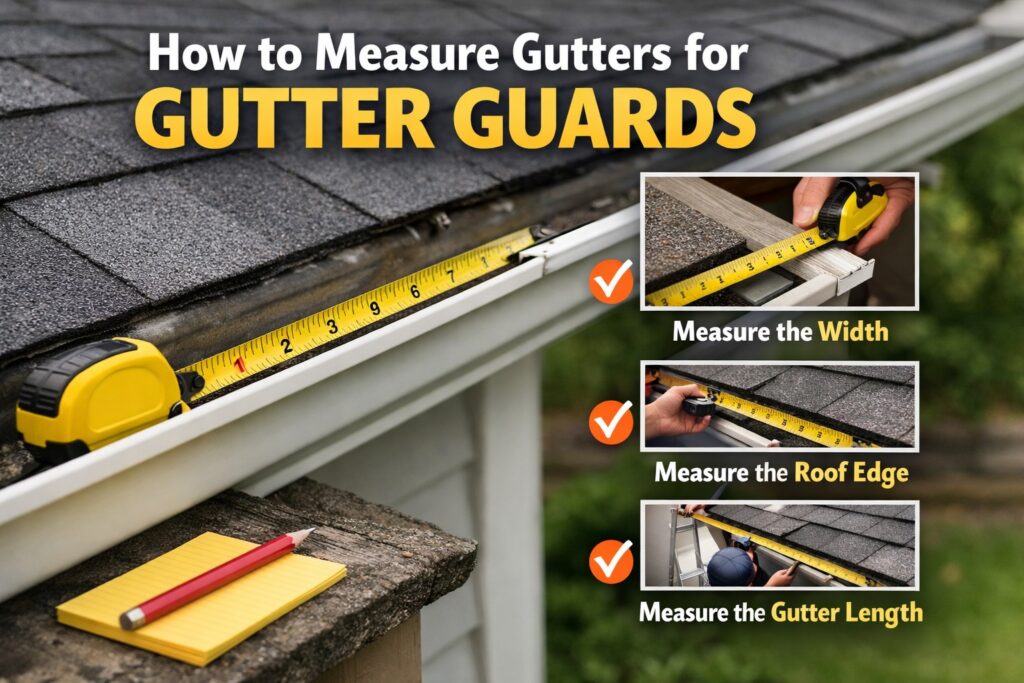
Installing gutter guards starts with accurate measurements. Many homeowners buy the wrong size simply because they measure the gutter incorrectly. Gutter guards are designed to match the width and total length of your existing gutters, so both measurements must be precise. The goal is simple: determine the gutter size (usually 5-inch or 6-inch) and calculate the total linear feet of gutter along the roofline. Once you have these numbers, you can choose the correct gutter guard type and know exactly how many sections are needed.
Table of Contents
Tools You Need Before Measuring Gutters
Before climbing a ladder, gather a few basic tools. The most important tool is a tape measure, preferably at least 25 feet long so it can cover long gutter runs. A stable ladder is required to reach the gutter safely. Many people also use a notepad or phone to record measurements while moving around the house. If the roofline is high or uneven, a helper on the ground can make the process easier. Measuring gutters does not require special equipment, but working carefully is important because measurements taken from the wrong position often lead to buying the wrong gutter guard size.
Step 1: Measure the Width of Your Gutters
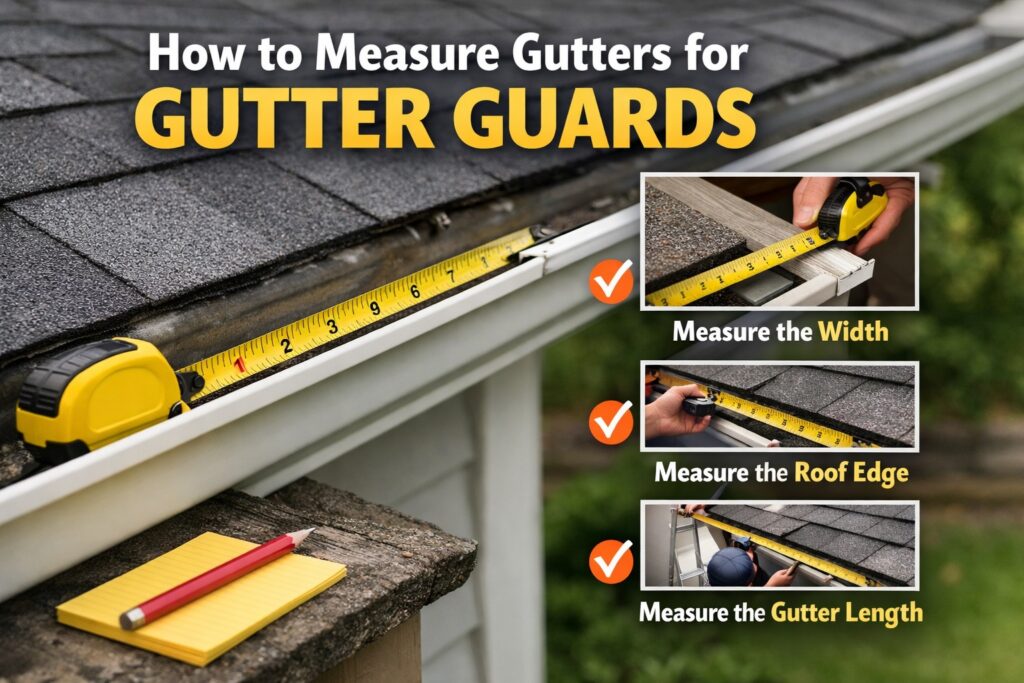
The first measurement determines the size of gutter guard you need. Gutter width is measured from the back edge of the gutter (where it attaches to the fascia board) to the front lip. Place the tape measure across the top opening of the gutter and record the distance. Most residential homes have 5-inch or 6-inch K-style gutters. If the measurement is close to five inches, a 5-inch gutter guard will fit. If it is closer to six inches, you will need a 6-inch guard. This step matters because gutter protection is manufactured to fit specific gutter widths. Even a small difference can prevent the guard from sitting correctly on the gutter.
Step 2: Measure the Total Length of Your Gutters
After identifying the gutter width, measure the total length of gutters along the roofline. Start at one corner of the house and measure each straight gutter section separately. Record the length of every run until you reach the starting point again. Houses often have multiple gutter sections on different sides, so measuring each section individually helps avoid mistakes. When finished, add all measurements together to determine the total linear feet of gutters. This number tells you how much gutter guard material you will need to cover the entire system.
Step 3: Calculate How Many Gutter Guards You Need
Gutter guards are usually sold in sections, commonly 3-foot or 4-foot pieces, depending on the brand. Once you know the total gutter length, divide that number by the length of each guard section. For example, if your house has 120 feet of gutters and the guards come in 4-foot sections, you would need about 30 sections. It is also wise to add a small extra amount to account for trimming or overlap near corners and downspouts. This simple calculation prevents running short during gutter guard installation and ensures the entire gutter system is covered.
Common Mistakes When Measuring Gutters
Several common mistakes cause inaccurate measurements. Some homeowners measure the inside of the gutter instead of the top opening, which gives the wrong size. Others forget to measure every gutter run and underestimate the total length. Another issue happens when gutters are slightly bent or filled with debris, making it hard to see the correct measurement points. Measuring from the fascia edge to the front lip and recording each section separately helps avoid these problems.
How to Tell if Your Gutters Are 5-Inch or 6-Inch
The easiest way to confirm gutter size is to measure the top opening from the back edge to the front lip of the gutter. A measurement close to five inches means the gutter system uses 5-inch gutters, while a measurement around six inches indicates a 6-inch gutter system. Five-inch gutters are the most common on residential homes because they handle normal rainfall for typical roof sizes. Six-inch gutters are often installed on larger roofs or areas that experience heavier rain because they carry more water. When choosing gutter guards, always match the guard size to the gutter width you measured.
How to Measure Linear Feet of Gutters Accurately
Linear feet refers to the total length of gutters installed around the house. To calculate it, measure every straight gutter section separately and write each number down. For example, one side of the house may have a 30-foot gutter run, while another side might have 40 feet. Add all sections together to get the final total. Downspouts are usually not included in this measurement because gutter guards only cover the horizontal gutter channels. Measuring this way gives a clear estimate of how much gutter guard material will be required.
Do Gutter Guards Fit All Types of Gutters
Gutter guards are designed to fit most common gutter shapes, but they are not completely universal. The majority of products are made for K-style gutters, which are the most widely used on residential homes. Some guards can also fit half-round gutters, although the installation method may be different. Foam or brush-style guards typically sit inside the gutter, while mesh or screen guards usually attach to the gutter edge and sometimes slide under the first row of roof shingles. Because designs vary, confirming the gutter width and type before buying guards helps ensure a proper fit.
Can Gutter Guards Be Installed on Existing Gutters
In most cases, gutter guards are installed directly on existing gutter systems. As long as the gutters are securely attached to the fascia and not badly damaged, guards can usually be added without replacing the gutters. However, if the gutters are sagging, leaking, or pulling away from the house, those problems should be repaired first, and then get gutter repair service. Installing guards on damaged gutters can trap debris or water and lead to further issues. A quick inspection of the gutter condition before installation helps ensure the guards perform as expected.
Also Read: How to Clean Gutters With Gutter Guards (Step-by-Step Guide for Homeowners)
Should Gutter Guards Go Under the Shingles
Some gutter guard designs require the back edge to slide slightly under the first row of roof shingles. This is common with metal mesh or micro-mesh guards that use the roofline for support. The front edge then clips onto the gutter lip, forming a sloped surface that guides water into the gutter while debris slides off. However, not every guard installs this way. Many screen or insert guards sit directly on the gutter without touching the shingles. When installing guards that go under shingles, the installer should lift the shingles gently rather than forcing the metal underneath, because forcing it can damage roofing materials.
Do You Need Extra Gutter Guard Material
When calculating how many gutter guards to buy, it is wise to include a small extra allowance. Corners, downspout openings, and short gutter sections often require trimming guard pieces to fit properly. Because of this, installers usually add 5–10 percent extra material beyond the total gutter length measurement. This small buffer prevents delays during installation and ensures that every gutter section is fully covered.
Also Read: How to Repair Leaky Gutter Corners
Final Check Before Buying Gutter Guards
Before purchasing gutter guards, review three measurements and conditions. First, confirm the gutter width so the guard size matches the gutter opening. Second, verify the total linear feet of gutters so you know how many guard sections are required. Third, inspect the gutters for problems such as loose brackets, sagging sections, or leaks. Fixing these issues before installing guards helps the system work correctly during heavy rain. With accurate measurements and a quick inspection, homeowners can choose the right gutter guard size and install it with fewer problems.
When Professional Measurement or Installation Is Better
Some homes have complex rooflines, steep slopes, or gutters installed at difficult angles. In these cases, measuring from a ladder can be risky and inaccurate. Older gutters may also be damaged or sagging, which affects measurement results. When these conditions exist, a professional gutter technician can inspect the system, measure it correctly, and recommend the right gutter guard size. Professional installation also ensures the guards fit tightly and continue working during heavy rain.