
Older homes near Depot Park, Main Street, and Cherokee Street handle water differently than newer builds. Many have built-in box gutters, half-round metal gutters, wood fascia, and original brick or plaster that does not forgive a season of standing water. Gutter cleaning in Kennesaw takes extra care on these properties, because the wrong ladder placement, tool, or pressure can cause damage that costs far more than the cleaning itself.
This guide covers how often to clean, what to inspect, what to avoid, and when to call a pro. If you want a crew that understands older rooflines, GFlow Kennesaw serves the downtown area and the greater Kennesaw community.
Table of Contents
Why Gutter Cleaning in Kennesaw Matters More for Historic Homes
Quick Answer
How often should a historic home in downtown Kennesaw have its gutters cleaned? At least twice a year: once in late spring after the pollen and oak tassel drop, and once in early winter after the leaves are down. Homes under mature oaks or pines need three to four cleanings a year. Homes with built-in box gutters should also be checked after every major storm, since a small clog can send water into the wall or cornice instead of off the roof.
What makes historic homes different
- Box and integrated gutters. These are built into the cornice or roof edge. When they clog, water has nowhere to go but inside the structure.
- Old metal and wood. Galvanized steel, copper, and tin gutters can thin out or pinhole over time. Wood fascia and soffit boards soak up water and rot from the inside while the paint still looks fine.
- Soft old brick and lime mortar. Constant overflow stains the brick, washes out mortar joints, and feeds moss.
- Lead paint. Homes built before 1978 may have lead paint on trim and fascia. Scraping or blasting it during cleaning is a health problem, not just a cosmetic one.
- Crawl space foundations. Overflow lands at the foundation, and many older Kennesaw homes sit on piers or shallow crawl spaces that stay damp for weeks.
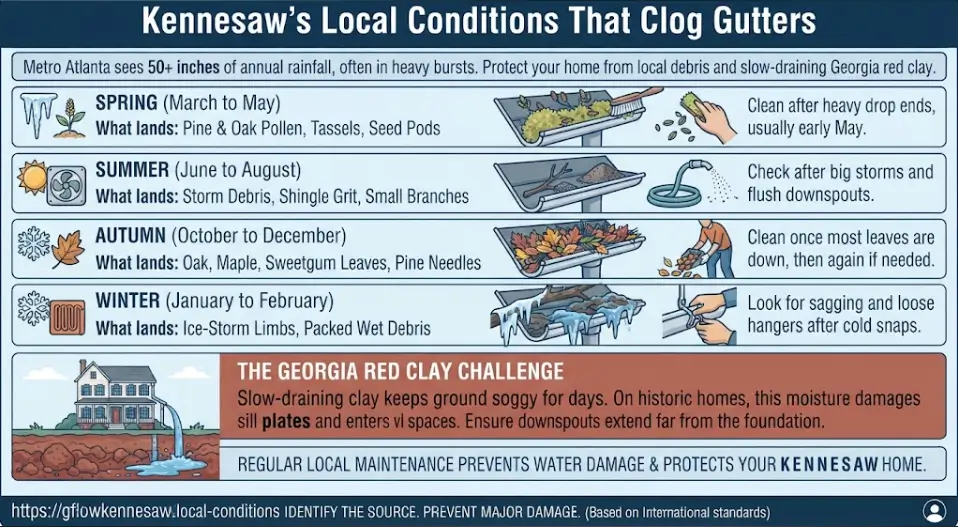
Kennesaw’s Local Conditions That Clog Gutters
Metro Atlanta gets around 50 inches of rain a year, and it tends to arrive in heavy bursts. That matters because a gutter that handles a drizzle can fail in a thunderstorm.
Here is what fills gutters in downtown Kennesaw through the year:
| Season | What lands in your gutters | What to do |
|---|---|---|
| March to May | Pine and oak pollen, oak tassels, seed pods | Clean after the heavy drop ends, usually early May |
| June to August | Storm debris, shingle grit, small branches | Check after big storms and flush downspouts |
| October to December | Oak, maple, and sweetgum leaves, pine needles | Clean once most leaves are down, then again if needed |
| January to February | Ice-storm limbs, packed wet debris | Look for sagging and loose hangers after cold snaps |
Georgia red clay adds its own problem. Clay-heavy soil drains slowly, so a downspout that dumps water next to the foundation can leave the ground soggy for days. On a historic house, that moisture goes straight into the sill plate and crawl space.
Signs Your Historic Gutters Need Attention Now
Walk around the house during or right after a rain and look for these:
- Water spilling over the edge instead of running to the downspouts.
- Peeling paint or dark streaks on the fascia or soffit under the gutter line.
- Soft wood. Press a screwdriver tip into the fascia. If it sinks in easily, the board is rotting.
- Stains or green growth on brick or siding below the gutter.
- Washed-out mulch or a trench under the roof edge.
- Plants or sprouts growing in the gutter. This means soil has built up.
- Sagging sections or gaps where gutter pieces meet.
- Water stains on interior ceilings near exterior walls, which can point to a leaking box gutter.
If you find soft wood or interior stains, get an inspection before the next rain. For a deeper look at what moisture does to older buildings, the National Park Service covers gutters, downspouts, and routine upkeep in its Preservation Brief 47 on maintaining historic building exteriors.
What to Avoid When Cleaning Historic Gutters
Skip these shortcuts:
- Pressure washing the gutter or fascia. It forces water behind trim, strips old paint, and can damage soft brick and mortar.
- Metal scrapers on copper or old galvanized steel. They scratch protective coatings and speed up corrosion.
- Leaning ladders directly on the gutter. Older gutters bend, and the ladder can crush a box gutter edge or crack plaster trim. A ladder stabilizer or standoff protects the roof edge.
- Dry-scraping paint. If the house predates 1978, assume lead paint until tested.
- Dumping debris on the ground near the foundation or in beds. Bag it and remove it.
- Installing gutter guards without checking fit. Some guards trap fine debris on flat or integrated gutters and make cleaning harder.
How a Proper Cleaning Works on an Older Home
A careful visit usually follows this order:
- Inspect first. Check hangers, seams, slope, and fascia condition before touching anything.
- Hand-clear debris. Scoop out leaves, needles, and sludge with gloved hands or a plastic scoop.
- Flush with a low-pressure hose. Start at the end farthest from the downspout and watch the flow.
- Test every downspout. A slow downspout means a clog in the elbow or underground drain.
- Check the outlets. Make sure water exits at least a few feet from the foundation, using extensions or splash blocks.
- Note repairs. Loose hangers, open seams, and rotted trim get documented so you can fix them before they spread.
For homeowners who prefer a crew that does this routinely, gutter cleaning services for older homes can include a basic condition check on the same visit.
Rules to Know Before You Change Anything
Cleaning is maintenance. Replacing or reshaping gutters is a different matter. Downtown Kennesaw sits inside the city’s local historic district, which is made up of four National Register-listed districts and the Camp McDonald site. If you plan to replace box gutters, swap materials, or change the look of the roof edge, check with the city first. The City of Kennesaw’s Historic Preservation Commission meets monthly and the city’s historic district page is the place to start. Do this before you buy materials, not after.
What Does It Cost?
Prices vary by roof height, access, and gutter type, but these ballpark ranges give you a sense of scale. Treat them as estimates, not quotes.
| Home type | Typical range |
|---|---|
| One-story, standard gutters | $120 to $250 |
| Two-story, standard gutters | $180 to $350 |
| Historic home with box or integrated gutters, steep roof, or tight access | $250 to $450+ |
| Add-on: downspout clearing or flushing | Often included, sometimes $25 to $75 extra |
Extra time for hand work, ladder protection, and cleanup is why historic homes cost more. It is still a small amount compared with replacing a rotted fascia board or repairing a wet crawl space.

A Simple Maintenance Plan for Downtown Kennesaw Homeowners
- Early May: Clean after pollen and tassel drop.
- After big summer storms: Look for overflow and flush downspouts.
- Early December: Clean after leaf fall.
- Once a year: Inspect hangers, seams, and fascia paint. Repaint bare wood quickly.
- Anytime: Keep downspout extensions in place and the ground sloping away from the house.
Book Gutter Cleaning in Kennesaw Before the Next Storm Season
If your home is one of the older properties downtown, regular cleaning is the cheapest way to protect the wood, brick, and foundation that give it its character. GFlow Kennesaw handles gutter cleaning in Kennesaw for historic and standard homes alike, and a quick call gets you a scheduling window and a straight answer on what your gutters need. Call [Phone Number] or visit https://gflowkennesaw.com/ to get started.
Frequently Asked Questions
How often should historic homes in downtown Kennesaw have their gutters cleaned?
Twice a year is the minimum. Homes shaded by oaks, pines, or sweetgums should plan on three to four cleanings, and box gutters should be checked after heavy storms.
Is it safe to pressure wash gutters on an older home?
No. High pressure can push water behind trim, strip old paint, and damage soft brick or lime mortar. A low-pressure hose and hand clearing work better and cause less harm.
What are box gutters, and why do they need special care?
Box gutters are built into the roof edge or cornice, often lined with metal. Because they are part of the structure, a clog or leak can send water into the wall or ceiling instead of off the roof.
Can I use gutter guards on a historic home?
Sometimes, but not always. Guards can change the look of the roof edge and may trap fine debris in half-round or integrated gutters. Have the fit checked first.
Do I need city approval to clean gutters in the Kennesaw historic district?
Routine cleaning is maintenance and generally does not change the building. Replacing gutters, switching materials, or altering the roof edge may need review, so confirm with the city before starting.
How do I know if my fascia board is rotting?
Press a screwdriver tip into the wood. If it sinks in without much force, or if the paint is bubbling and peeling in the same spot, the board is likely holding moisture and decaying.
What does pine straw and pollen do to gutters?
Pine needles knit together and form mats over downspout openings. Pollen mixes with rain into a thick paste that traps seeds and leaves. Both slow drainage and can turn into a heavy, wet layer by early summer.
Does clogged guttering affect my foundation?
Yes. Overflow lands next to the house, and Georgia red clay drains slowly. That keeps crawl spaces and sill plates damp, which invites rot, mold, and pests.
How much does gutter cleaning cost for a historic home in Kennesaw?
Expect roughly $250 to $450 or more for homes with box gutters, steep roofs, or tight access. Standard homes cost less. Final pricing depends on height, access, and condition.
What if my home was built before 1978?
Assume the trim paint may contain lead until it is tested. Avoid dry-scraping or sanding near gutters and fascia, and use a crew that works carefully around painted wood.